What's New
BY Sarah Patterson June 27, 2026
What's New October 21, 2024
Radio news: Why it’s not all about you
Reporter
You’d think it would be a pretty simple distinction. And yet, so many people seem to confuse being a newsreader with being a commentator.
Newsflash: You can’t be both at once.
News can and should be delivered with heart and feeling. But personal opinion should be left at the studio door.
Acclaimed American investigative journalist Carl Bernstein once said “The truth is not a matter of opinion. It’s what the evidence shows.”
If there’s one thing that really grinds my gears as a journalist, it’s biased reporting in radio news.
Twisting the truth here. Tweaking an intro to fit an agenda there. Passing off opinion as fact. Maybe even adding a dollop of mayo on top by offering your own punchy little editorial take at the end of a story.
The sheer arrogance of assuming the listener cares what YOU – the newsreader – thinks or feels! It blows my mind. Yet, sadly, I’ve seen it happen countless times over the past three decades. Even more so recently.
The last time I called it out, my inquiry was met with open hostility. The ‘journalist’ in question seemed to feel they were providing an important community service.
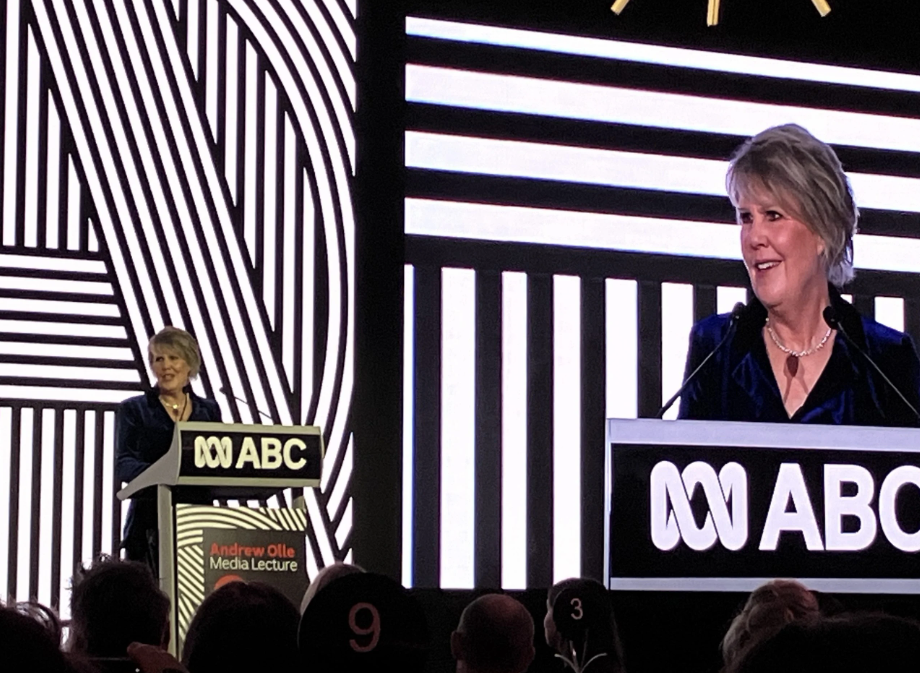
Which is why last week’s speech by the ABC’s Fran Kelly at the annual Andrew Olle Media Lecture last week really struck a chord with me, and the main gist of it, she managed to nail in just eight simple words:
Less commentary, more reporting. Less telling, more inquiry.
Kelly told of the influence Olle – the legendary journalist – had on her career, and his focus on facts.
“I learned about objectivity and balance, but importantly I also learned that the story was never about me and what I thought.”
In her speech, Kelly referenced the story of how, forty years ago, the magician David Copperfield famously made the Statue of Liberty ‘disappear.’
“People who were there that night saw it happen. One minute it was towering above them, the next it was gone. The cheering audience and fifty million TV viewers were not wrong in believing it had disappeared. It had gone from right in front of their eyes. Only, of course, it hadn’t.”
“In an audacious sleight of hand, aided by clever engineering, the stage upon which the audience sat had been moved surreptitiously to change their perspective – to block their view of the statue behind two giant columns. To obscure their view of what was really there.”
“David Copperfield was in the business of magic, benign trickery, so people who turned up and tuned in for the show knew he was out to deceive them in the name of entertainment.”
“But vox-pops with people in the crowd showed they were so happy to believe the statue was gone. Their incredulity and delight was real.”
As Copperfield so boldly demonstrated, says Kelly, our perception of reality can be manipulated.
In her speech, Kelly said our world has become an echo chamber of conflicting perceived truths, fuelled by the internet. What started out as small groups of whispering plotters have now morphed into groups of hundreds of thousands, if not millions.
“What once could be proven categorically is now up for bitter, sustained debate on a scale that was simply impossible to achieve before we all moved online,” said Kelly.
“Fact-checkers around the globe cannot keep up. We’re trapped in a crazy battle of the so-called, conflicting truths.”
As journalists, verified, irrefutable facts are our stock in trade, and our only credential is the truth, says Kelly.
“And as the waters of disinformation swirl, we must seek it, hold it and raise it above the waves.”
And with that, Kelly served up a challenge to today’s mainstream media: Get back to the crucial role of providing listeners with the information they need to make an informed view on what might well be a very divisive issue.
Or as I like to say: Newsreaders: Read the news. Journalists: Investigate. Commentators: Commentate.
Sarah Patterson is a radio journalist of more than 30 years, former Breakfast News Presenter on Triple M’s Hot Breakfast with Eddie McGuire, Radio Today Editor and former News Director at Air News.
Related news
What's New
BY Sarah Patterson June 26, 2026

Thank you Sarah! It’s so refreshing to hear this from someone of your experience and calibre in a media landscape so full of blatant bias and self-importance.
Interesting article Sarah.
Most of the popular news podcasts such as the Squiz, Briefing, Daily etc. give commentary as they deliver the news and this makes it more conversational, but as long as listeners know this it’s okay.
Where I don’t think it’s okay is when newsreaders give subtle reactions to indicate their reaction to a story, which can equate to bias. I won’t name names but there’s a prominent presenter on Ten who often does this.
As for Fran Kelly, I used to listen to her political interviews knowing she would be fair but ‘investigate’, no matter which party, and I wish others at the ABC were like that too.
This! So important in this day and age and I feel like the waters get muddied too often.
I was thankful to read the news, but provide my opinion/ commentary in on-air segments (and I think) I was able to seperate the two.
It’s a thin line though.
Well done Sarah for shining a light on sensibility in journalism during a time where there seems to be less of it, with even the most “trusted” news sources seemingly twisting narratives to suit their own political agendas. Keep fighting for radio’s rights!