What's New
BY Sarah Patterson June 29, 2026
What's New June 24, 2026
Is Sydney FM Breakfast radio losing listeners to competitors – or losing them altogether?
Reporter
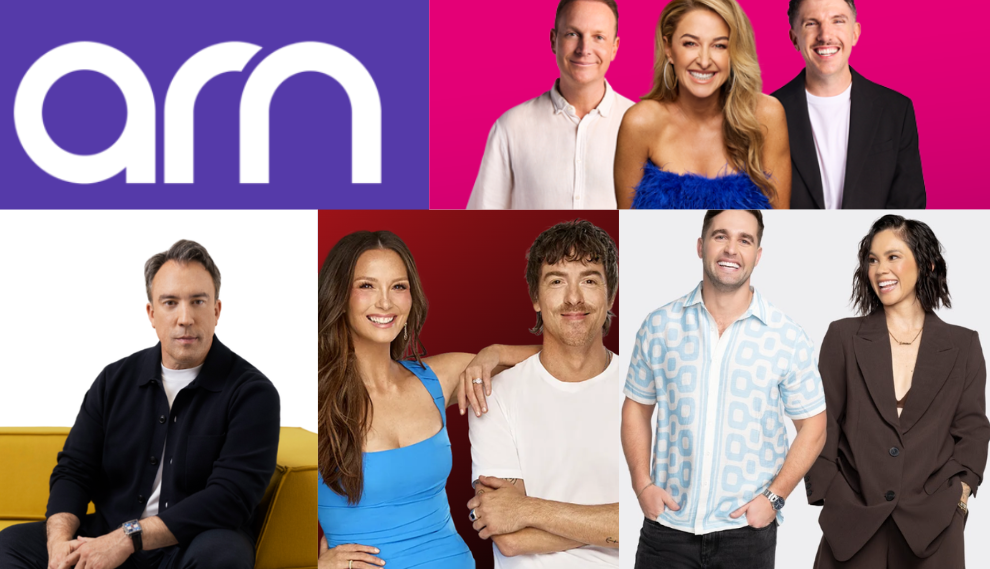
This week ARN somehow managed to simultaneously deliver both clarity and confusion on the future of KIIS Sydney Breakfast, when it confirmed Kris Fade was not part of its plans for 2027.
Fade himself then revealed that, whilst he had been offered the opportunity to join the network, he’d turned it down.
Instead, he reportedly signed on for another year with Virgin Radio Dubai.
This prompted a flood of comments to the Radio Today inbox, including one from Paul who suggested that signing a one-year contract hardly constitutes a commitment:
“Sounds like Kris from Dubai will be doing KIIS breakfast in 2028.”
The big question now is: What does ARN do in the meantime?
Universal NSW Manager and AFTRS graduate Scott Thomson – who has worked across the broadcast, print and digital media industries – raises concerns about the current holding pattern of rotating co-hosts on KIIS Breakfast.
On LinkedIn, Thomson said:
“ARN executives have spoken about taking their time and launching a new KIIS Breakfast show next year. But that’s the real risk. Once listeners break the habit of waking up with radio, they don’t simply sit around waiting for a better Breakfast show to arrive. They find alternatives. Podcasts. Spotify. YouTube. Their own playlists.”
Thomson says the latest Sydney radio ratings revealed a troubling truth: that radio’s biggest problem isn’t losing listeners to competitors. It’s losing them altogether.
He says KIIS Breakfast shedding 3.5 share points in the wake of Kyle & Jackie O’s departure was hardly surprising. Replacing a long-established Breakfast show was never going to be a walk in the park.
The worrying part, he says, is that those listeners didn’t appear to go anywhere else.
“They didn’t flock to Nova. They didn’t migrate to Gold. They didn’t suddenly discover 2DayFM. Many of them seem to have simply left radio altogether.”
Thomson says some broadcasters will point to share increases as evidence of success, when they actually lose listeners.
It’s like securing a bigger slice of a smaller pie.
“Gold’s Christian O’Connell enjoyed an increase in share and a modest rise in cumulative audience. Yet the show still sits around two share points behind where Jonesy & Amanda were this time last year – and they achieved those numbers in a far more competitive market.”
“Then there’s 2DayFM, which arguably had the biggest opportunity in years to capitalise on disruption in the market. Instead, it went backwards.”
“The real story from these ratings isn’t who won and who lost,” says Thomson. “It’s that radio itself lost.”
Thomson says that for years, Breakfast radio has been the engine room of the industry. When audiences disengage from Breakfast and don’t resurface elsewhere on the dial, the challenge becomes far greater than simply finding a better show.
“The longer radio waits, the harder and more expensive it becomes to bring those listeners back.”
“The industry shouldn’t be celebrating marginal share gains while the total audience shrinks.”
“A bigger slice of a smaller market isn’t growth. It’s a warning sign.”


Nice article. Good to hear another perspective.
Editor’s note: This comment has been edited.
This article reflects how I have been feeling for a long time. I don’t blame anyone for persisting with strategies that used to work in the 20th century. One wrong move and you can do some serious damage in this era. Still, fortune favours the brave and someone will emerge as the champion with the right strategy, one day.
For starters The talent pool is empty cause ARN and radio in general has sacked everyone ! Meanwhile I’m guessing Duncan is scanning the comedy clubs and the contestants on love island to find someone
The connection people have with two is fading fast with the demise of real people behind the console.
Radio is edging closer to an iPod strapped to a transmitter, that’s most of the ‘stations’ on dab+ already.
Radio was part of the family, it was a friend.
@Doug: Duncan Campbell? He left ARN a while ago, if I’m not mistaken.
Anyway, ratings declines for both KIIS and Gold breakfast in Sydney were pretty much to be expected after their major presenter reshuffles. Similarly, the rise of Smooth 95.3’s More Music Breakfast Show – now sure, Bogart & Emma were on the up last year but there’s little doubt IMO that reshuffles at competing stations would’ve helped them.
What’s far more concerning, is the fact 2DayFM don’t seem to have benefited much from the demise of Kyle & Jackie O. Indeed, 104.1’s ratings fell during the first full post-K&JO era survey! Probably doesn’t bode well for the future of Nath & Emma, if they can’t get a decent lift in their numbers soon.
I’d probably also suggest that Classic Hits 2UE should be doing better for ACE than it has been so far this year. Now sure, a 4BH-like result in a market with two somewhat older-skewing FM stations is unrealistic but I don’t see how a well programmed/positioned 2UE shouldn’t be able to score 5-6%!
This is a really important article and radio should take note. Engaging listeners and communities is what binds audiences, and when the link is broken, it is broken. It would be interesting to see the ACMA’s research into media consumption later this year to give a deep insight into FM radio listener numbers as a percentage of population. My feeling is that percentage will be in decline, which means it will be much harder to secure advertisers and charge the premiums currently in the market. Interesting times. Hopefully it doesn’t migrate to foreign owned social platforms.
It’s so much different than Melbourne’s breakfast shows….
SCA love to save money so maybe they should broadcast Hit Newcastle breakfast show Jess & Rohan to Sydney…. nothing to lose .
ARN probably will put Dave Hughes into Melbourne in 2027
In Sydney probably they will wait to finish with all the Kyle&Jackie O drama….and we will see new breakfast show in 2028…
Im in Sydney and prefer to listen to Ross and Russ on 3AW.
Same as Australia Over Night on 3AW with Tony with the Passing Parade and the serial.
Much better than what Phill Oneil does on GB