What's New
BY Sarah Patterson June 27, 2026
What's New September 11, 2025
24 years on: How radio news has changed since 9/11
Reporter
In 2001, landline phones were (still) a thing. So were answering machines. Cutting edge indeed.
It was through these devices that – on this day 24 years ago – I first learned of a horrific situation unfolding in New York.
Roused from a deep sleep by a warbling message from a radio newsroom colleague, I wandered into the lounge room.
“Planes are crashing into the World Trade Centre. TURN ON THE TV!”
Like a stunned mullet, I did as I was told.
As I tried to grasp the reality of the pictures I was seeing, life as we knew it changed forever and for radio journalists the world over, the days and weeks that followed were the most intense and demanding of our lives.
So much was different back then. For one thing, radio newsrooms had more staff. From the newbies to the most senior journalists, everyone pitched in. Even the sports reporters dropped everything to help write scripts, monitor news and chase audio grabs.
Today, on the 24th anniversary of the September 11 terrorist attacks, it seems fitting to pose the question:
How would radio news cover a world event of this magnitude today?
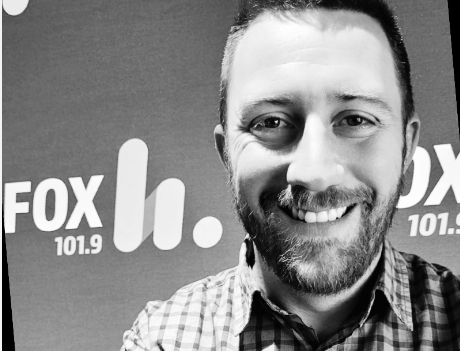
SCA National News Operations Manager James Lake (pictured above) says in 2025, radio newsrooms are much faster, more networked and more remote-capable than ever.
“While it took some time to adjust, most newsrooms I’m aware of now have their services fully pre-recorded to play to air, meaning anyone can present any bulletin, for any market, from anywhere.”
“This was an evolution of radio news workflows already rolling out before the pandemic but probably accelerated by that global event.”
Lake says that since 9/11, the development of social media has been added to the resource pile as a tool for gathering information fast, including audio that radio newsrooms are able to access and re-broadcast.
“Before the pandemic, nobody ever dreamed of putting a TV guest on a live broadcast from a Zoom call. Now it’s the norm for most TV guests who are not in the studio. Our ‘acceptable standards’ for TV quality changed.”
“Meantime – for radio, the idea of conducting interviews with talent over Zoom is a no-brainer, because the audio is so much better than a phone line.”
“While there’s no denying the elephant in the newsroom – there are fewer journalists now than 24 years ago – the advancement of technology has allowed us to keep up the output and adapt faster than ever before, with smaller teams.”
“Are we now better equipped or less equipped to handle a story of 9/11’s magnitude? We are certainly better equipped to move fast and reach targeted audiences.”
“But it’s also a delicate act of getting information out both at speed and with accuracy.”
“I’d say we’re better equipped because broadcasters are able to tap into news teams from other locations to get information to air rapidly.”
“We do this regularly in bushfire and cyclone season, when some stations are forced to evacuate because of a threat to that location and staff – broadcasting can seamlessly be supported from anywhere else in the country.”
“While 9/11 broke our brains – there have been similar news events in more recent times which have required just as much of a pivot for teams, like the Black Saturday bushfires in 2009 and the passing of Queen Elizabeth – just two that come to mind, that envelop the news cycle for days.”
“When the Queen died, we turned a complex, multi-day ceremonial plan into clear, rolling radio – because our systems and playbooks let us move fast without losing accuracy.”
“That same muscle would carry us through the next time we’re gripped by a 9/11 scale story.”
It is comforting to know that radio is ready to cover cover a story of that magnitude as far as technical resources are concerned.
But its downsizing of human resources and the shift in staff experience level begs the question: Do radio newsrooms have the journalistic skills to match?
The other obvious change from 24 years ago is how – and from where – we consume our news content.
I started this story with the question: How would radio news cover a world event of this magnitude if it happened tomorrow?
I end it with another.
In radio, where would you find out about it?
This article is brought to you by Radio Release.

*Images supplied
Related news
What's New
BY Sarah Patterson June 26, 2026

Remember listener to 3MMM the next morning. Fitzie and Rob McCasker were hosting the coverage