What's New
BY Sarah Patterson June 26, 2026
What's New June 26, 2026
AUDIO ACADEMY | Connection Over Perfection: The Evolution Of Voiceovers
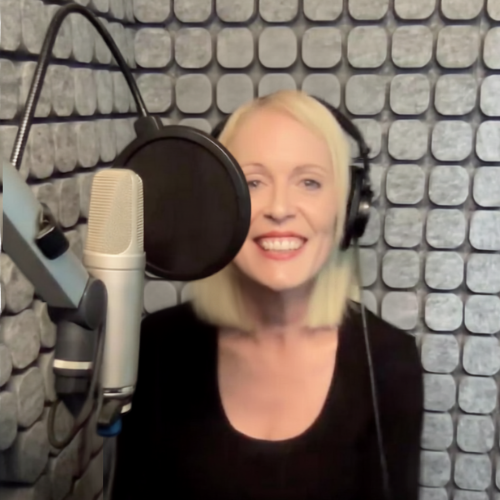
Audio Academy – a joint initiative of radioinfo and Abe’s Audio.
Hear from experienced professionals across the audio industry
The hard-sell announcer voiceovers that once dominated radio and television ads have gradually been replaced by something much more conversational. Today, audiences don’t want to feel like they’re being sold to – they want to feel like someone’s talking directly to them.
After more than two decades behind the microphone, Anna has voiced everything from national ad campaigns to corporate narration and educational content. Along the way, she’s seen trends come and go, technology transform the industry, and home studios become the norm.
We caught up with Anna to talk about what makes a voiceover sound authentic, how she approaches every script, the biggest mistakes new voice actors make, and why she believes human connection will always have a place – even in the age of AI.
How Anna Started Her Voiceover Career
Like many people in the audio industry, Anna never set out to become a voice actor.
Her career began in her late teens, reading educational material for vision-impaired university students, long before text-to-speech software existed. Armed with a tape recorder and stacks of psychology and economics textbooks, she’d spend hours recording material onto cassette tapes so students could access their coursework.
It was there that someone first recognised her ability to bring words to life.
“They told me I had a really easy-listening voice,” Anna recalls, and that simple piece of encouragement planted the seed for everything that followed.
From there, she explored journalism before moving into radio, eventually discovering that voiceover was where she truly belonged.
Looking back now, she laughs at how different the industry was. Before professionally built home studios became commonplace, she recorded from a makeshift booth inside a cupboard. At one stage, she spent days trying to eliminate a mysterious clicking noise that kept appearing in her recordings, convinced something was wrong with her equipment.
The culprit? Every time she squeezed into the cupboard, she’d knock a coat hanger, which gently tapped against the wall throughout the recording.
Thankfully, studios (and technology) have come a long way since then!
What Makes a Voiceover Sound Natural Instead of ‘Read’?
For Anna, the answer has very little to do with microphones or vocal technique.
“It’s connection over perfection,” she says.
That philosophy has become her guiding principle, but it’s also a reflection of how much audience expectations have changed.
There was a time when voiceovers were all about projection. Commercials were polished, theatrical and highly produced, with every word delivered perfectly. Those styles suited the era, but listeners today are looking for something very different.
“They don’t want to be advertised to anymore,” Anna explains. “They want to be talked to, not performed at.”
That’s why modern voiceovers often feel less like performances and more like conversations. Instead of chasing flawless delivery, Anna focuses on making every read feel genuine. A slight smile, a natural pause or a tiny imperfection often creates far more connection than perfect diction ever could.
For brands, that’s an important shift. Audiences are becoming increasingly good at recognising authenticity, and they respond to voices that sound like real people rather than polished announcers.
Approaching a Script For The First Time
After thousands of recording sessions, Anna no longer marks every breath and pause in the script like she did early in her career. Instead, the first thing she thinks about is the listener.
Who are they? Where are they hearing this? What do they need to feel by the time the script finishes?
“It’s never just about reading words,” she says. “It’s about communicating an idea, a product or a feeling.”
She also likes to imagine the script belongs to her own business. If she genuinely believed in what she was talking about, how would she say it?
That small change in mindset helps transform a script from something that’s being read into something that’s being shared. It also makes the performance feel more personal, which is exactly what audiences are looking for.
A Common Mistake
Anna admits she made the same mistake many voice actors make when they’re starting out.
She tried too hard. “I was trying to sound too ‘voiceovery’,” she laughs.
Like many performers, she became focused on pronunciation, projection and getting every word exactly right. Over time, she realised listeners weren’t paying attention to perfect enunciation – they were responding to emotion.
That lesson completely changed the way she approached voiceover work. Rather than concentrating on sounding impressive, she started concentrating on sounding believable.
It’s a subtle shift, but it’s one that’s become increasingly important as advertising has moved towards more conversational storytelling.
How Much Direction Do You Like During a Recording Session?
After years of working from her own studio, Anna has become comfortable directing herself. But even so, she still values another set of ears in the room.
A good producer, she says, isn’t there to control the performance. They’re there to help shape it. Sometimes that means suggesting a different pace. Sometimes it’s reminding you to pull back or try a completely different interpretation. The key is reading the room and understanding the people involved.
Some clients are happy to let the voice artist lead. Others have several stakeholders, all with different opinions. “It’s all about reading the vibe,” Anna says.
When everyone collaborates well, the performance almost always improves.
One Thing Anna Would Change
Without hesitation, Anna says she’d give scripts a little more breathing room. She understands why copywriters and clients try to squeeze every selling point into thirty seconds, but she believes that approach often works against the message.
“If you can’t read it comfortably, we can’t either,” she says.
Good copy gives voiceover performers room to think, pause and connect. It creates space for emotion rather than simply delivering information.
The strongest scripts don’t try to say everything. They say one thing, clearly.
What’s Your View on AI and the Future of Voiceovers?
AI has become one of the biggest talking points in the voiceover industry, and Anna admits there was a time when it genuinely worried her. Today, (even though she still has some of those worries), her perspective is much more balanced.
She believes AI has a ole to play, particularly for pitch reads, internal presentations and production workflows. There’s no denying how quickly the technology has improved.
Where she believes it still falls short is in the very thing audiences value most. Connection.
“It can imitate sound incredibly well,” she says. “But those little nuances, the timing and the authenticity come from people.”
Rather than seeing AI as a replacement, Anna sees it as another tool that will sit alongside human performers. Ethical AI will undoubtedly become part of the industry, but when brands want to build trust, tell stories and genuinely connect with audiences, she believes there will always be a place for a real voice.
Listen to our full chat here.
Recent comments (0)
Post new comment
Related news
What's New
BY Sarah Patterson June 26, 2026