Advertising
BY RadioToday Network June 25, 2026
Advertising July 17, 2026
If radio launched tomorrow, we wouldn’t be defending it, we’d be rationing it
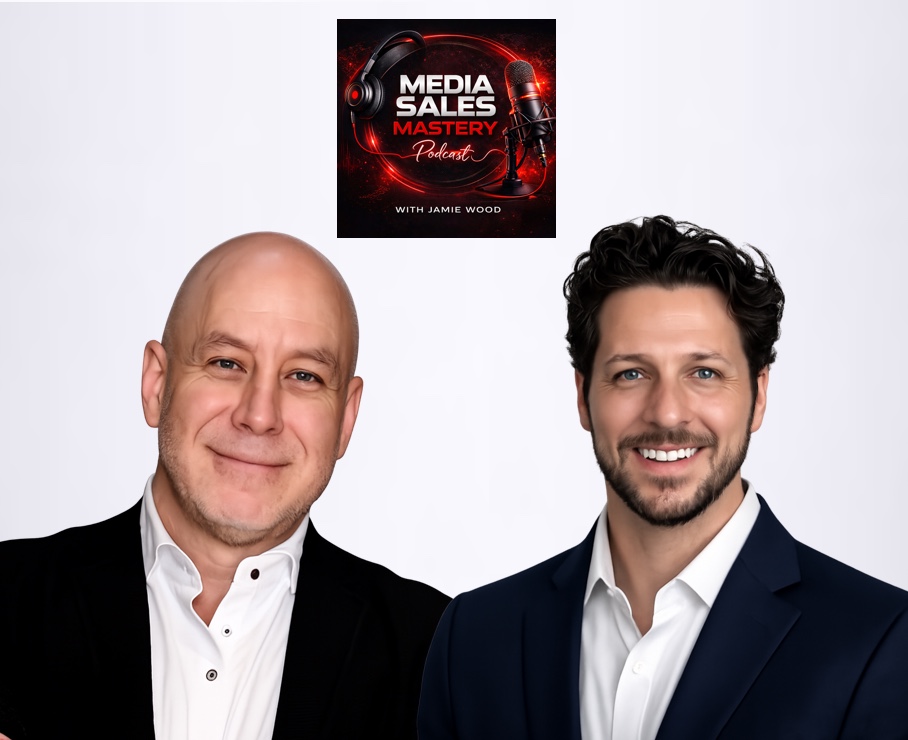
Radio salespeople have spent a decade justifying their existence. Stingray Radio President Steve Jones told Jamie Wood we’ve been running the argument backwards, and the fix starts with pitching radio like a founder, not an incumbent.
For years, radio salespeople have been pushed into defensive conversations. Justifying their audience. Justifying their measurement. Justifying the effectiveness of the medium, its position on the plan, and its rightful place in the media ecosystem five years from now.
So here’s a thought experiment.
You’re a venture capitalist. A founder walks in, and for the first ninety seconds you assume they’re exaggerating.
Zero friction. No app, no account, no password, no subscription, no data plan. The hardware is already in every home, office and car and has been for decades. Onboarding is one button. Penetration isn’t a segment or a cohort, it’s most of the population of a city, every week. Cost of acquiring a user: nothing.
Then they get to the parts nobody in your portfolio can copy.
There’s no algorithm. A human curates the entire product, the news, the music, the weather, the thing everyone at work is arguing about, and the business has no incentive to keep anyone enraged or scrolling.
The creative is dynamic and can updated in real time, by a person, because it started raining at 7:04am or the local side won on the weekend.
And the advertising lands on everyone at once. A hundred thousand people, the same minute. The shared moment your portfolio has spent a decade failing to buy.
Then the founder gets to the commercial model. Every advertiser is assigned a dedicated specialist who meets them in person, builds a solution around their audience, budget and objectives, and is accountable for the results.
That product exists. It’s been in market for a century. Yet most of the people selling it walk into meetings braced for an argument.
The exercise we never run on ourselves
There are two disciplines worth naming here, and our industry only ever practises one of them.
Red teaming comes from the military. You think like the enemy to expose your own deficiencies before they find them for you. Radio sellers are world-class at this. We can all recite what the platforms beat us on: attribution, targeting, self-serve, the dashboard the client can open at 11pm. It’s also the exercise that has quietly taught a generation of sellers to apologise.
The other discipline is reverse benchmarking, which Rory Sutherland describes as finding the things your competitors are bad at and becoming spectacularly good at them. Conventional benchmarking turns you into a slightly worse copy of your rival. Reverse benchmarking makes you the only place in the market that can do the thing they can’t.
Radio has barely run it. So I put the question to Steve Jones, President of Stingray Radio in Canada: if local broadcast radio was invented tomorrow, what would keep the tech platforms up at night?
He went to the platforms first.
“We have 100% awareness, no app to download, no bandwidth to use up to get our service. We’re everywhere at once, ubiquitous. That’s scary. Even the biggest social media platforms don’t have that kind of reach and scale… It’s like air or water.”
Read that back as a founder’s pitch deck rather than a defence of a legacy medium. It’s an extraordinary slide.
Attribution is the barista. Trust is the eight-dollar coffee.
The moment that stopped me was Steve’s split between attribution and trust, two things our industry has quietly allowed to fuse into one.
“Attribution is like going into Starbucks and giving the barista credit for the vanilla bean sweet cream frappuccino you just ordered. That they made it for you. But it’s decades worth of brand building and trust building that allows Starbucks to charge eight bucks for that drink.”
He isn’t arguing attribution has no value. He’s arguing we’ve accepted a swap that costs us money.
“Those Instagram ads, you click on it, you buy the crap, and you never see that retailer again ever. You’re a $9.99 transaction lifetime value. But if I buy that same thing at a local store that earns my trust and I come back for another thing and another thing, I’m now a $999 or a $9,999 lifetime value.”
Every seller reading this has lost a campaign to a platform that could prove a click. Steve’s point is that the click was never the argument worth having.
Twenty people heard it. Twenty walked in.
Then Steve took a swing at the currency the industry is built on.
“Local sellers in our organisation are encouraged to not talk about numbers, not talk about ratings, not talk about average quarter hours… If I’m a retailer in Charlottetown and your radio ad brings in 20 people, it doesn’t matter how many heard it. It could have been heard by 21 people, but 20 responded. It could have been heard by 20,000 people. 20 responded.”
Locality is not geography
The reason any of it works:
“We confuse geography with locality. Locality really is just what makes me feel connected today, what me and my friends and my community are talking about.”
Locality is also the entire business model of the influencer economy. Brands have spent a decade and billions learning to buy trusted voices who reflect an audience back at itself. Radio has been doing it at scale, with talent accountable to the market they live in, since before the word influencer existed.
The self-limiting belief
None of these advantages are new. Every seller reading this has had them the whole time. The gap is belief. When you’ve spent years being told your medium is the past, you start selling like someone who believes it.
“We do ourselves no positives by assuming we’re the underdog, by buying into the narrative that other people have created for us. We would do ourselves a lot of service by carrying a little bit more swagger.”
And the reframe that resolves it:
“Who wants to buy radio in 2026? People want customers in 2026. So sell them customers, sell them results, sell them trust, sell them cash registers ringing. That’s what sells.”
Steve’s challenge is to hold two ideas at once: radio faces real threats, some of them existential, and radio remains healthy, loud and worth being proud of. Both are true. Only one of them is currently shaping how we sell.
So run the reverse benchmark. Take the things a platform is bad at, put them at the front of your next pitch, and price them like the scarce assets they are.
Then walk in like the founder in the VC’s office.
By Jamie Wood
Jamie Wood is the Global Sales Director of Boost Media International, a media sales coach and trainer, and host of the Media Sales Mastery podcast.
Steve Jones is the President of Stingray Radio in Canada, a keynote speaker, and the author of Brand Like a Rock Star and Start You Up.
The full conversation with Steve Jones, “Local Media Matters”, is available now on Media Sales Mastery: pod.link/1479664152
Recent comments (0)
Post new comment
Related news
Advertising
BY RadioToday Network April 14, 2026