Advertising
BY Staff Writer July 17, 2026
Advertising May 23, 2025
AI generated fake websites exploit ad industry protection tools
An advertising industry standard for ensuring advertisers can trust websites is being exploited by AI generated fake websites to steal ad revenue from genuine news and sport publishers.
The IAB initiative Ads.txt, launched in 2017, aims to increase transparency in the programmatic advertising ecosystem. A text file embedded in a website structure allows sites to declare the companies they authorize to sell their digital inventory. Programmatic platforms process these files to qualify the inventory they purchase.
Digital media measurement company DoubleVerify has tracked over 200 fake websites that use the exploit to pretend to be legitimate publishers and trick programmatic ad buying platforms into placing ad banners on their sites.
The sites have been cloned from real sites and are filled with generated ‘AI Slop’ content to make them look legitimate. They have no real traffic, only bot generated clicks.
Analysis of this scam by the DV Fraud Lab “highlights the growing challenges of the GenAI era and the urgent need for advanced tools to combat fraud and low-quality inventory.”
Cloned sites targeting publishers such as the BBC, CBS and ESPN are amongst the fake sites identified. Deceptive URLs include espn24.co.uk, nbcsportz.com, nbcsport.co.uk, cbsnewz.com, cbsnews2.com, bbcsportss.co.uk, 247bbcnews.com, foxnigeria.com.ng and more. After DV identified the cloned URLs, most of them have now been reported and blocked, but more fake AI Slop filled sites continue to pop up to scam programmatic ad buyers.
According to the DV Fraud Lab report, the GenAI slop sites “erode trust in programmatic media buying, diverting ad budgets from quality publishers to low-quality or fraudulent inventory. In addition to this direct financial loss, ads on these sites can damage a brand’s reputation by associating it with untrustworthy and poorly made content.”
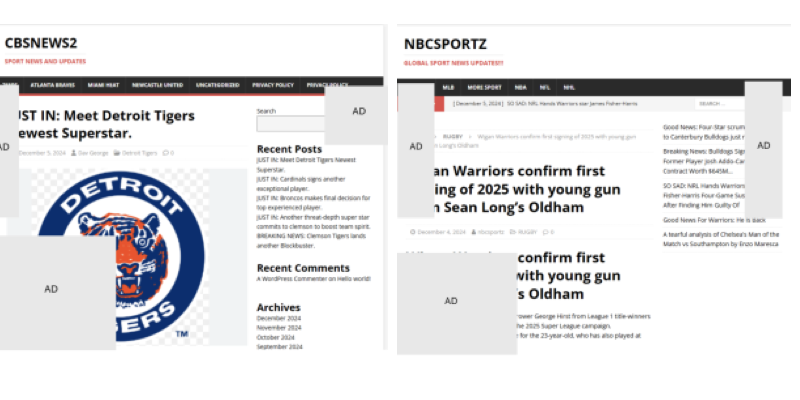
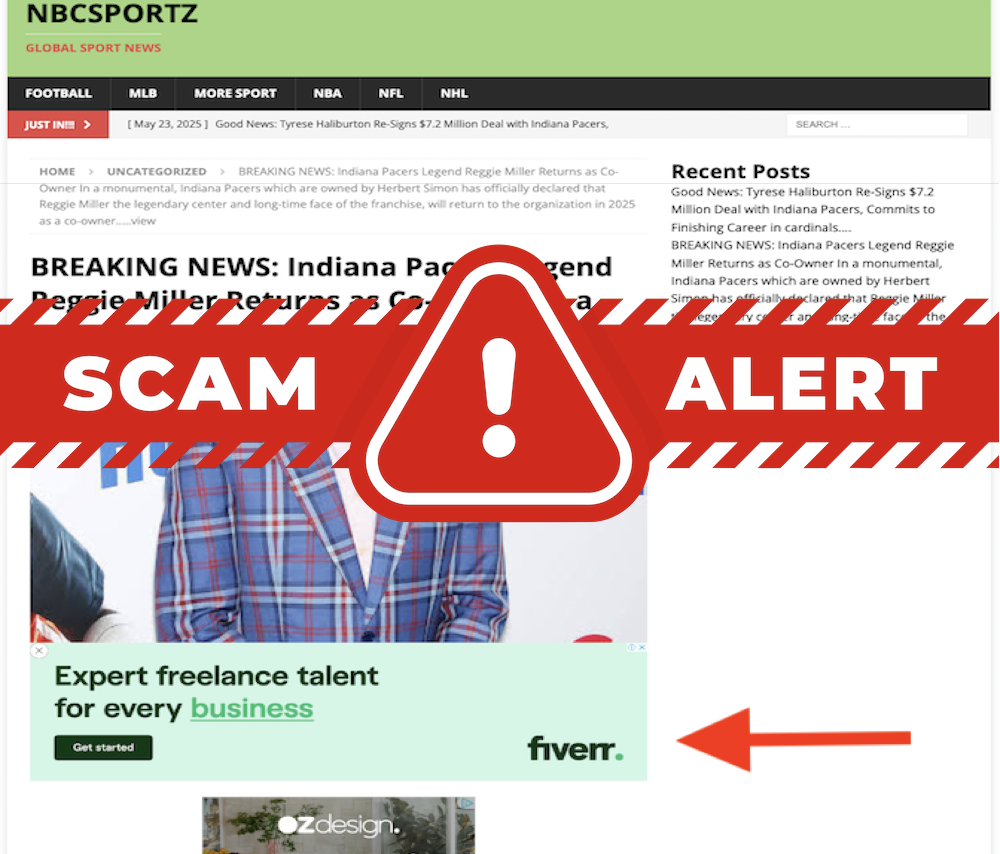
In another example identified in the report, one AI-powered site DV analyzed, nbcsportz.com, copied and rewrote content from Bleacher Report, with ads from top retailers appearing next to the plagiarized content.
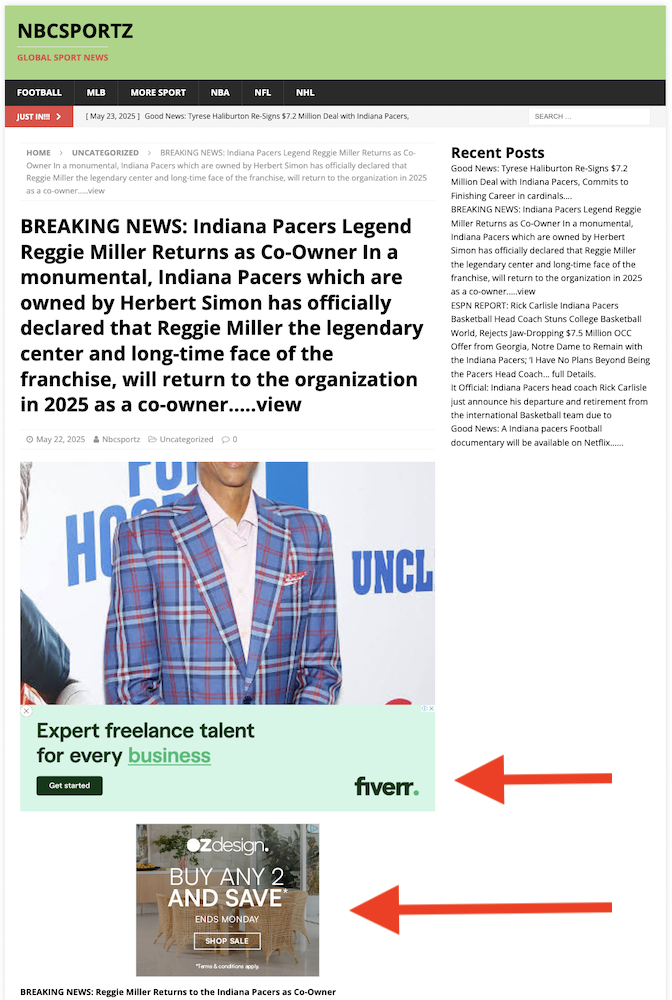
When we checked the NBC SportZ (spelt with a Z rather than Sports, spelt with an S on the real NBC sports page) we found ads for movie sites, the web payment company Square, recruitment site FiveRR, OzDesign and others, sold through an online agency.
After we contacted the agency and alerted them to the fakes, they told us: “The publishers cited in the article had been using our technology without authorization, and we’ve since taken action to ensure they can no longer serve ads through our platform.”
The NBC Sportz website no longer shows any ads.
Apart from spelling Sportz with a Z, the other giveaway was that the stolen photo of ‘Indiana Pacers legend Reggie Miller’ had his head cropped off.
AI-generated fake sites either produce believable articles at scale to fill them up with content and make them look real, or they just scrape and plagiarize content from legitimate publishers. Blocking tools against AI scraping, called ‘exclusion lists’ are often not effective, because as soon as one scraper name is blocked another different name is created by the fraudsters
Another trick is when fraudsters, posing as legitimate banner ad sales companies, may persuade publishers to add them as authorized resellers in their ads.txt files by promising more ads to increase revenue. We get many emails per week from companies like this promising to make more revenue for us if we include their ad slot and authorise them in our ads.txt file. After doing our homework to check them out, at least some of them appear to be fake.
The Double Verify report says: “By mimicking legitimate publishers and exploiting perceived safe zones like sports content, bad actors are finding new ways to deceive advertisers. As the industry becomes more reliant on automation and AI, it’s crucial to implement multi-layered verification processes to protect ad spend and maintain consumer trust.”
Or maybe buy from a real person.
Recent comments (0)
Post new comment
Related news
Advertising
BY RadioToday Network June 25, 2026