What's New
BY RadioToday Network June 3, 2026
What's New May 13, 2026
How media fared in the Federal Budget
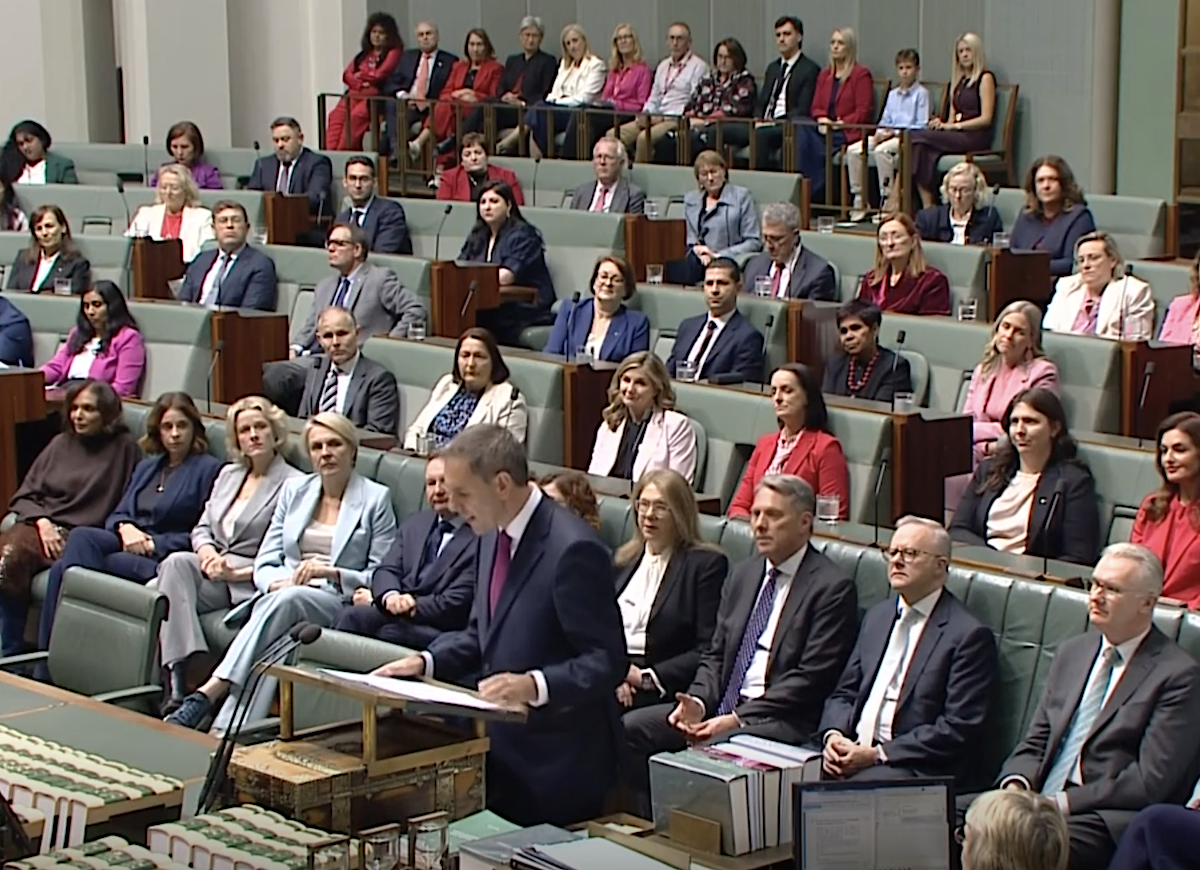
Most media organisations got some benefit from Labor Treasurer Jim Chalmers‘ Budget, delivered last night.
Facing a range of budgetary challenges from wars, rising fuel and house prices, and the constanly increasing cost of living, Chalmers characterised this budget as important and ambitious, a “responsible and reforming budget.”
For broadcasters and government media institutions there were small benefits all round.
Commercial Radio
Commercial Radio and Television scored a win, with the continuation of the licence fee rebate, which was announced last week and enacted in this budget. The Commercial Broadcasting Tax will be suspended for a further two years, delivering an estimated $111.3 million in savings for the commercial sector.
The suspension “acknowledges commercial television and radio broadcasters face financial pressures in a changing media landscape,” and aims to “help the industry build resilience and keep pace with changing digital technologies,” so it can deliver outcomes “that are in the interest of the Australian public.”
In the estimates charts, the current financial year is the first column shown in the charts (Financial Year July 2025 – June 2026), followed by next year’s allocation (25-26), then subsequent years after that.
Australian Broadcasting Corporation
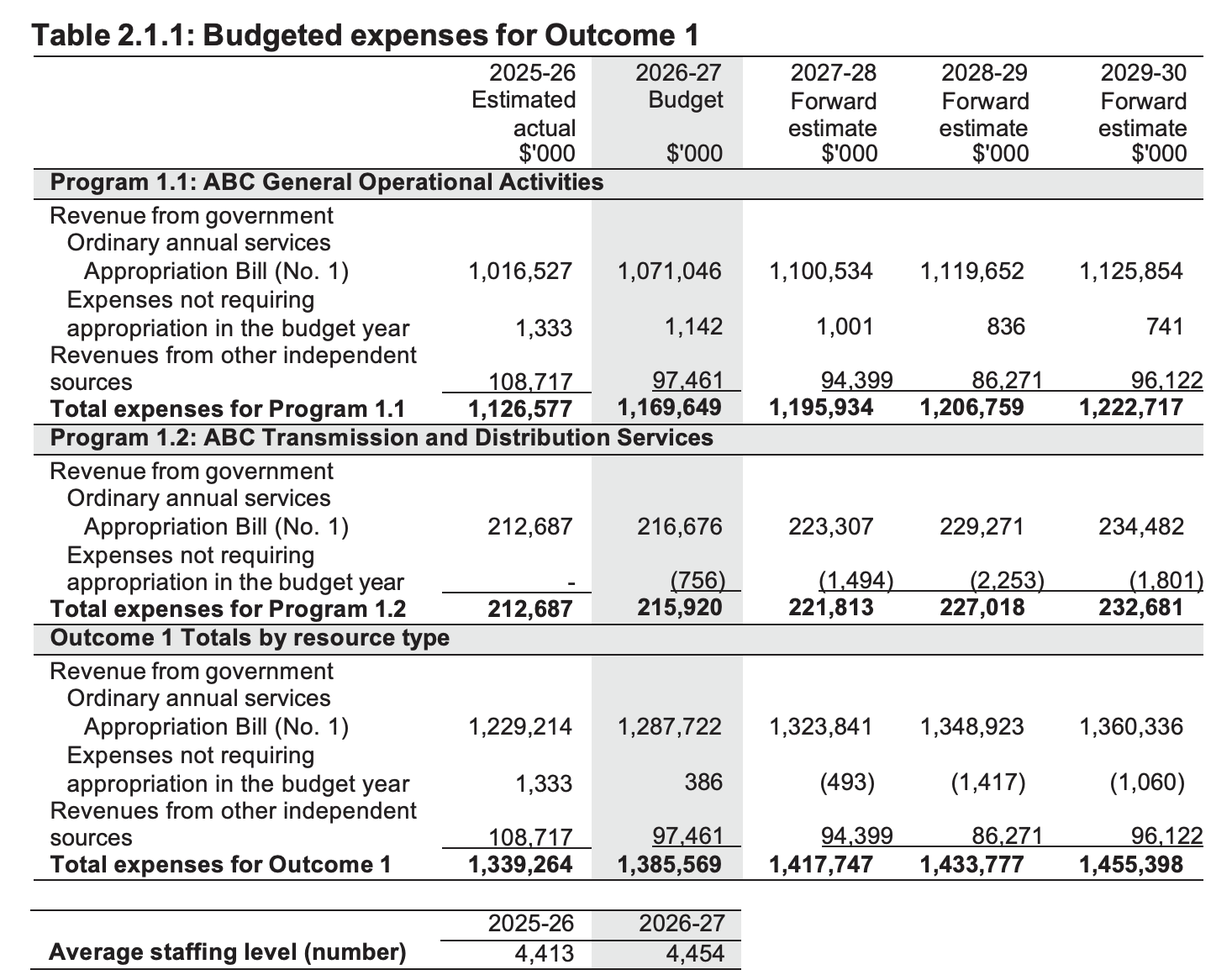
The ABC gets a boost of almost $50 million with staff numbers expected to increase slightly from 4,413 to 4,454 people.
Current funds from government this financial year were $1.229 billion, supplemented by external earnings of $108 million from “independent sources” such as program sales and merchandise. This totalled to a $1.339 billion budget for the national broadcaster this financial year (ending next month).
Next financial year (July 2026 – June 2027) the ABC will get $1.287 billion from government and will be expected to earn $97 million from its own revenue sources, for a total budget of $1.385 billion. Further slight increases in the forward estimates will grow the ABC budget to a total of $1.455 billion in the 29/30 financial year. $216 million has been earmarked for transmission costs next financial year.
The ABC has also received an additional $14 million over two years to fund increased international work across the Indo-Pacific region. “Since the launch of the government’s Pacific Engagement initiatives in 2022 the ABC has welcomed the opportunity to expand our reach, deepen audience engagement and support local media capacity across the Indo-Pacific,” said ABC managing director Hugh Marks.

Special Broadcasting Service
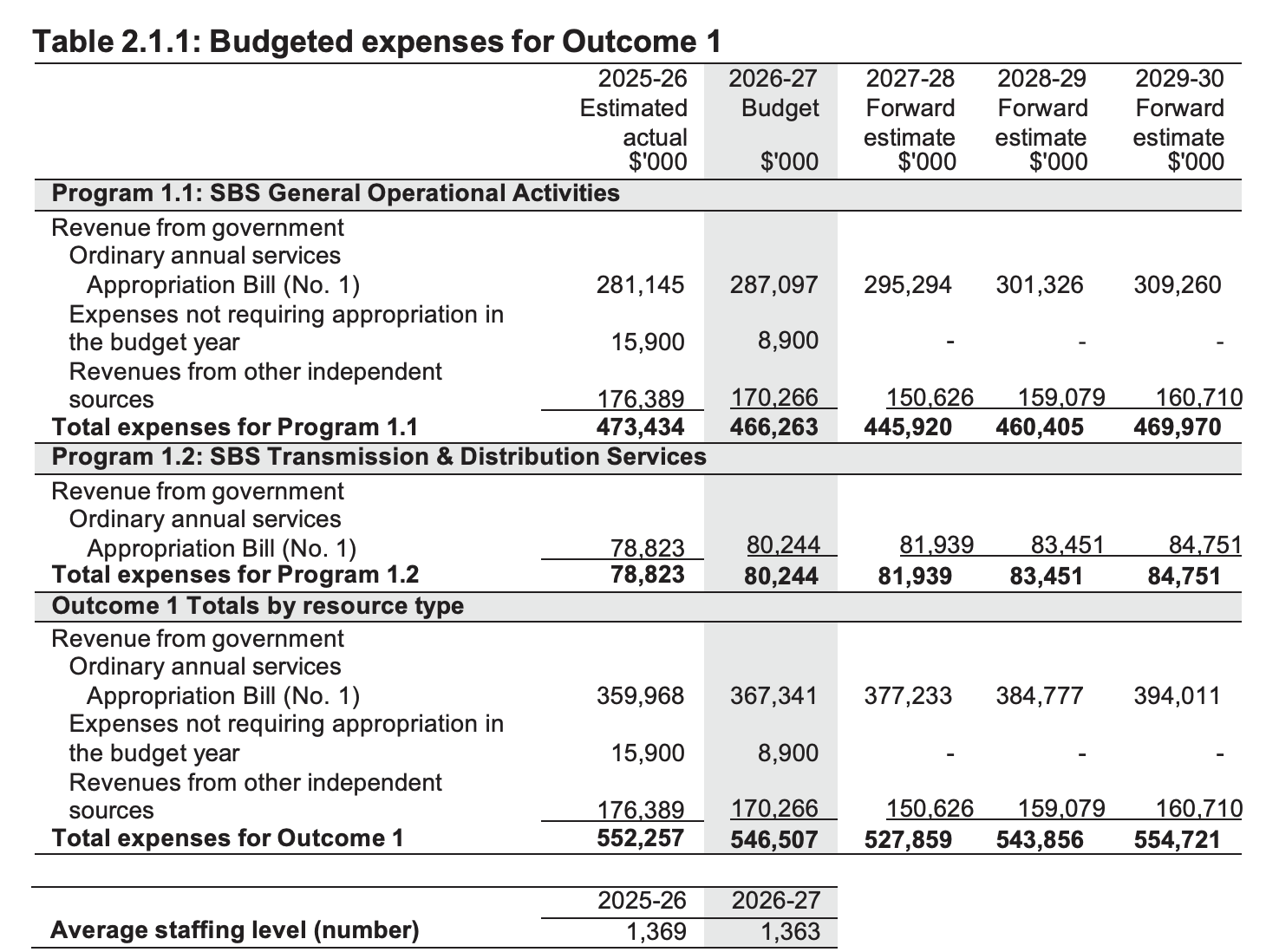
Australia’s other national broadcaster, multi-lingual service SBS, has also had an increase of about $8 million from government, but the broadcaster estimates that external revenue will be lower than this financial year, resulting in a smaller budgeet.
This financial year SBS received $359 million from government. Next financial year it will receive $367 million. Funding will increase by an average of $9 million every year within the forward projections to 2030.
SBS is allowed to take advertising and is expected to earn its own commercial revenue as well as its government allocation. The corporation’s revenue target for this year was $176 million. Next year that target is $170 million, resulting in a drop of the overall budget, fomr $552 million currently to $546 million next financial year.
Staff numbers are expected to remain steady at 1,369 people. Transmission will cost $78 million.
Community Broadcasting
The community broadcasting sector is entering the second year of a three-year commitment from government of $5m per year in non-recurrent, additional funding.
As expected, the portfolio details of the Federal Budget show the 2026/27 budget and forward estimates for the ‘Community Broadcasting Program’ (the funding line that the Community Broadcasting Foundation administers) are as follows:
- 2026/27 $28.638m, up from $27,827 million in the current 25/26 financial year
- 2027/28 $29.390m
- 2028/29 $24.822m
- 2029/30 $25.418m
In 2028/29, the programm funding will drop back to the baseline after the conclusion of the three-year funding commitment.
Funding for the First Nations part of the community broadcasting sector, via the National Indigenous Australians Agency, appears to remain as expected.

Some of the other media related allocations to be funded by the Department of Communications are:
The News Media Assistance Program is funding for a range of public interest journalism initiatives. The News Innovation Fund is now open for applications to grants from $10,000 to $9 million available to support news publishers with initiatives such as:
- developing new or diversified revenue streams,
- expanding reach into new or underserved communities, or
- improving news production or organisational capability.
The News Innovation Fund builds on the success of the Journalism Assistance Fund, which is supporting 185 news outlets to keep journalists employed and producing news that informs and educates. Both the News Innovation Fund and the Journalism Assistance Fund are part of the News Media Assistance Program, which supports Australian media diversity and public interest journalism.
Supporting Australian Associated Press is special funding for Australia’s international newswire service. The $11 million this financial year wil increase to $26 million next year, then dorp back to $11 million. No finds are allocated beyond the 2027-28 financial year.
Regional Broadcasting is a category of funding to support regional commercial broadcasters. The figures are commercial in confidence and not for publication.
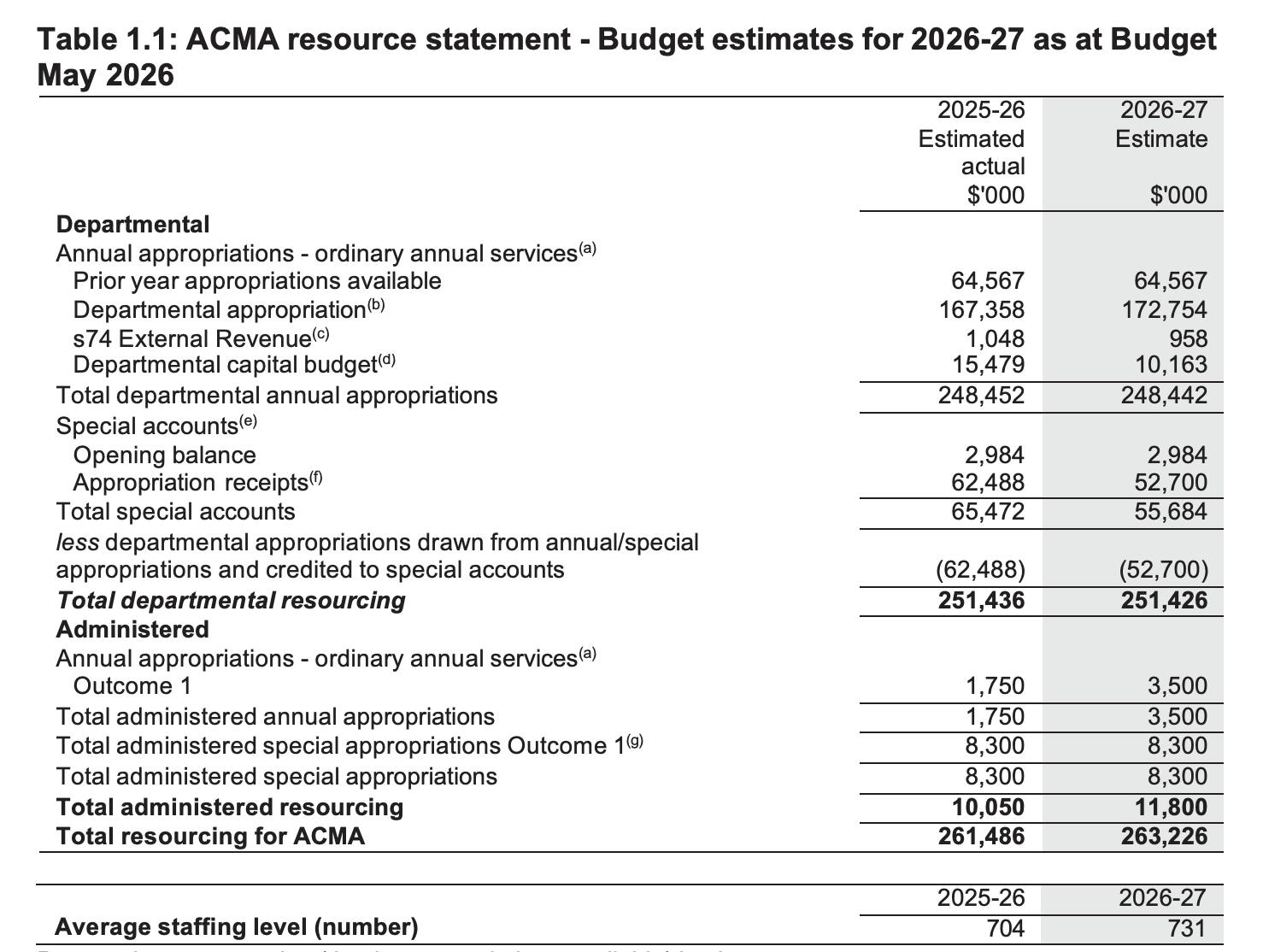
The Australian Communications and Media Authority (ACMA) will get a minor increase from $261 million this financial year to $263 million next year. The ACMA has 704 staff and expects to lift its staff numbers to 731 next financial year.
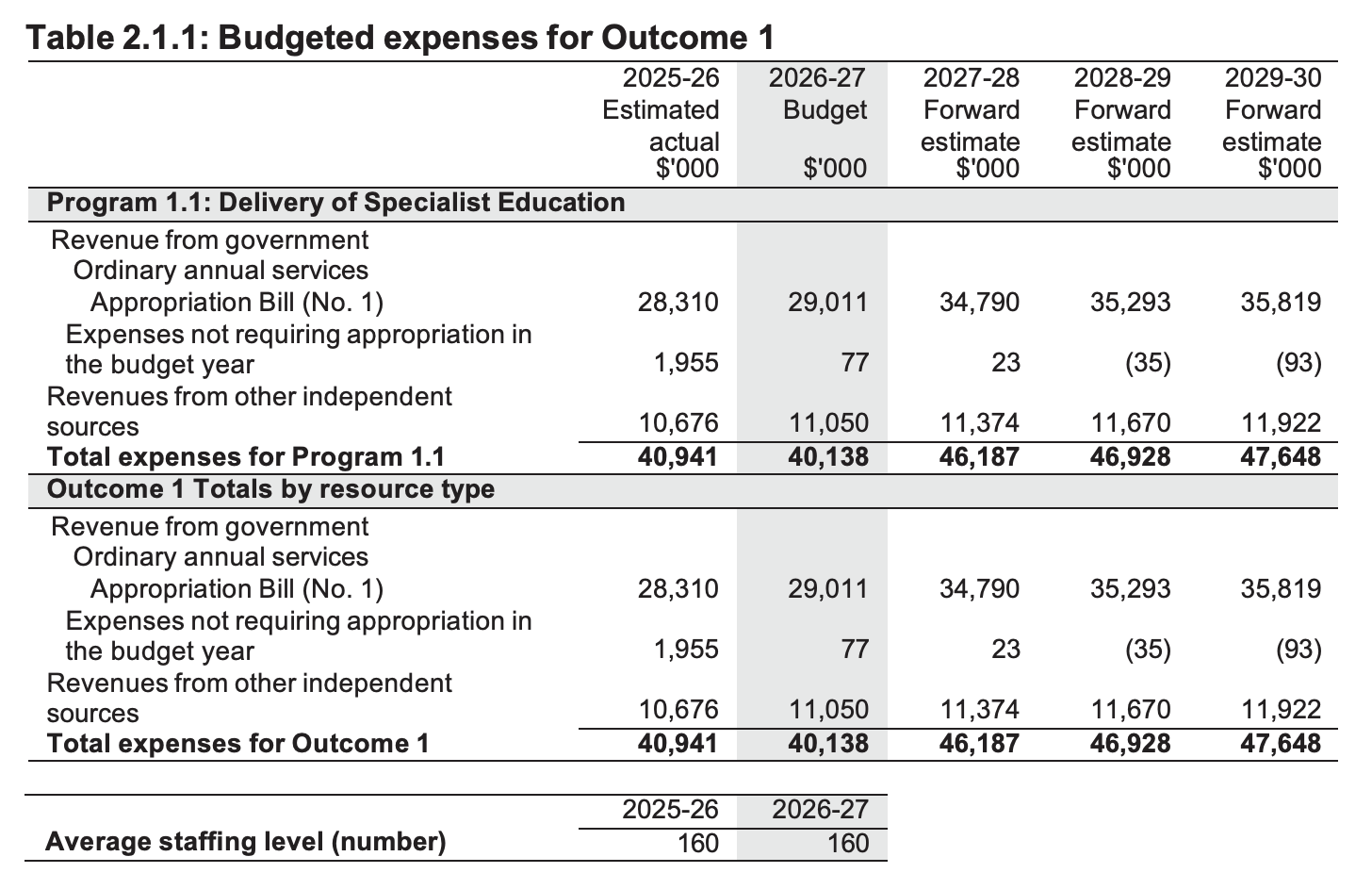
Australian Film Television and Radio School
AFTRS has had a small increase in funding, up from $28 million this financial year to $29 million next financial year and small growth every year to 2030.
Staffing is expected to remain stable at 160 people. AFTRS is expected to earn about $10 million this financial year and $11 million next financial, making its budget for next financial year $40 million.
National Film and Sound Archive
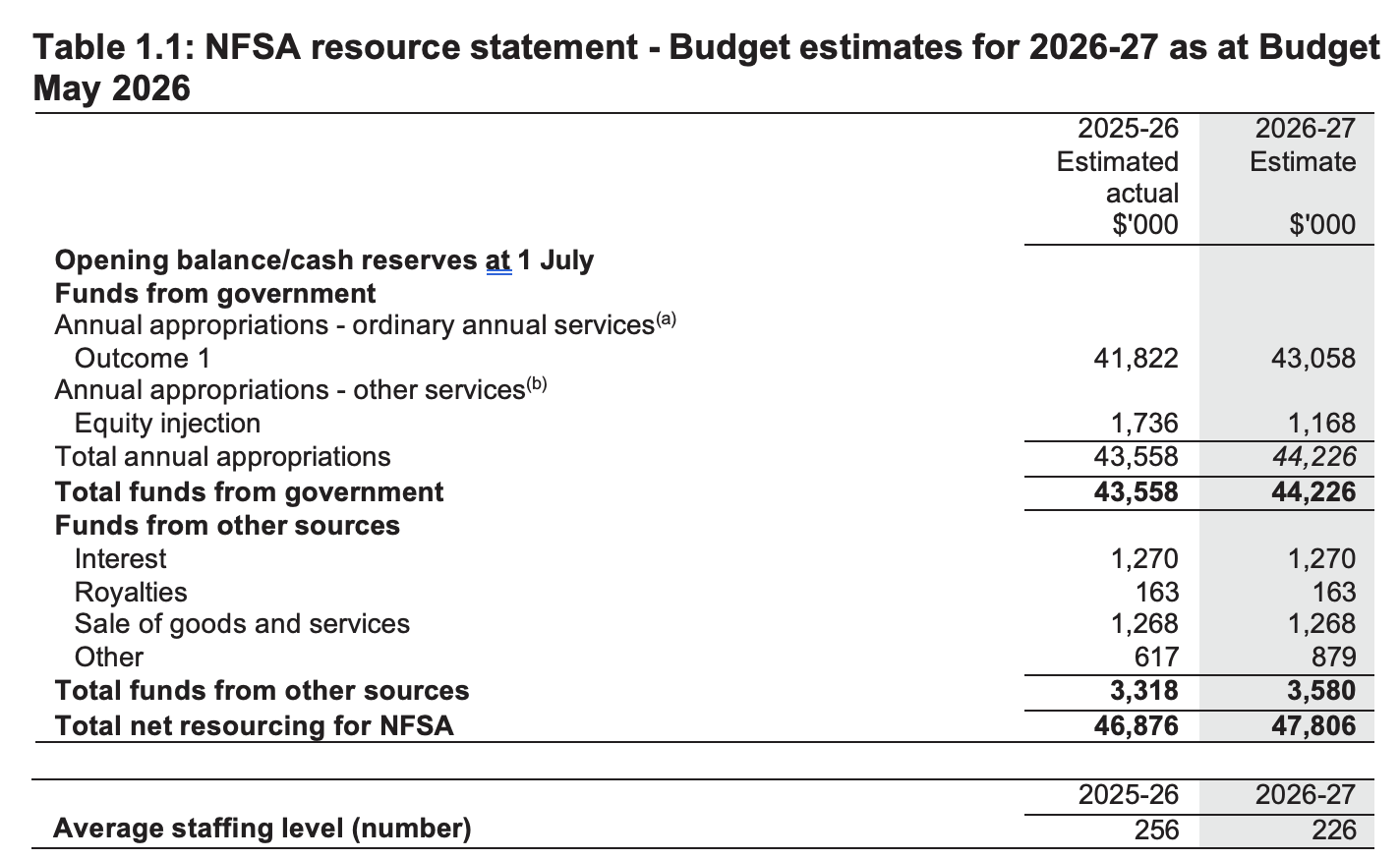
The NFSA received $46 million in government funds this financial year, and next financial is epxecting an increase to $47 million.
Staff numbers will reduce from the current 256 to 226.
Related reports:
Recent comments (0)
Post new comment