What's New
BY Sarah Patterson July 14, 2026
What's New February 12, 2026
World Radio Day 2026: Letter from Paris
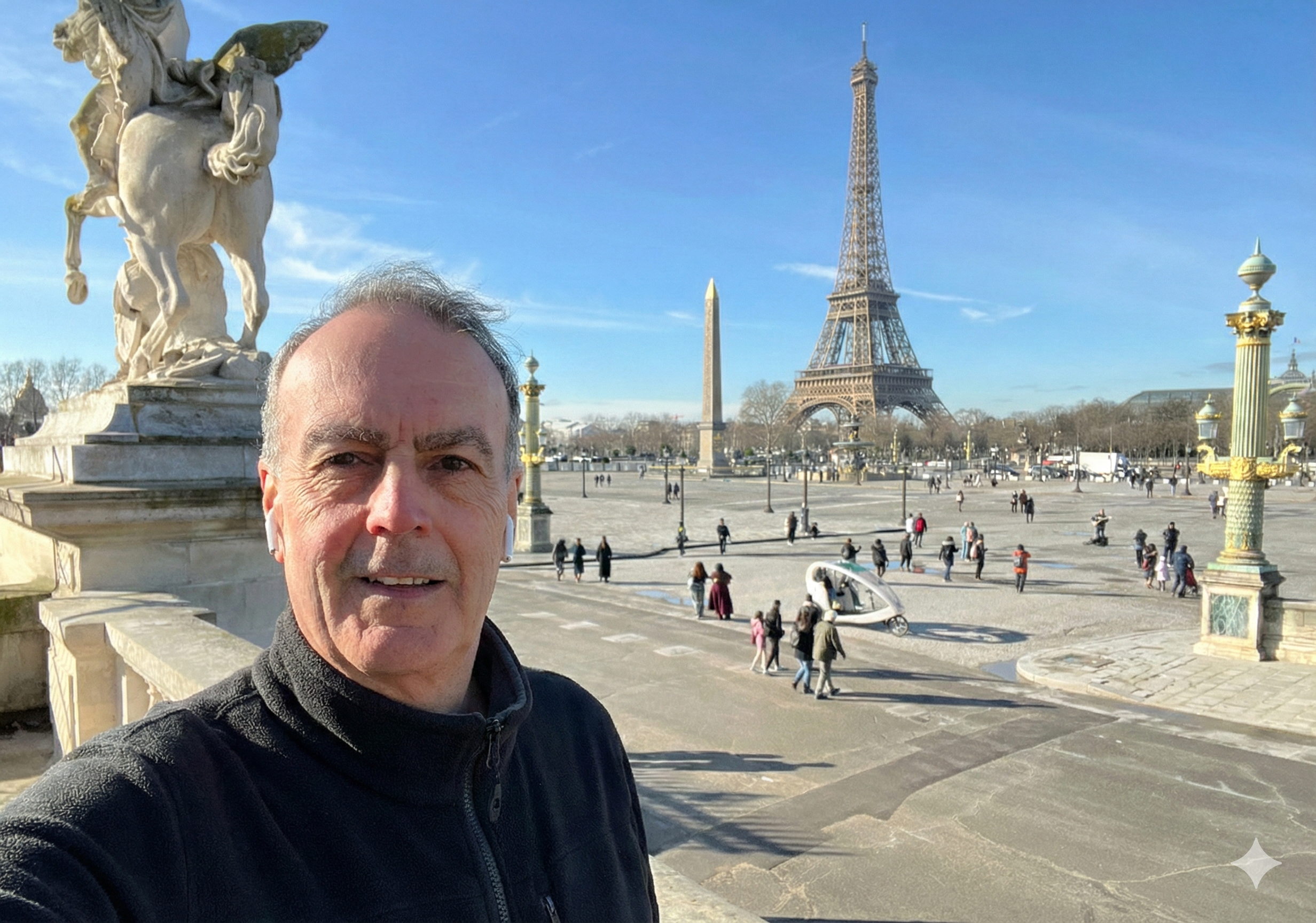
This year I am writing my 2026 World Radio Day letter on the way back from Paris.
I have been in Europe covering the Paris Radio Show and new European developments in technology and programming using AI.
Radio and AI is the theme of this year’s World Radio Day.
Artificial Intelligence is here and we can’t escape it, but we have to ensure it is used efficiently and wisely in our industry.
Unsophisticated leaders who are using AI simply for cost cutting probably don’t really understand it. Those who do understand it are integrating it into their workflows with the aim of doing things better, not just cheaper. I have seen this now across several examples in my latest Europe trip, where I got the chance to talk to innovators and examine new tools.
I have seen some best-in-class AI integrations now available in Protools, the extra efficiency VoxPro has added with a simple gap buster AI add-on, and some good tools for research and audio editing.
I have also seen some deliberate low quality AI creations that don’t value credibility. But irresponsible creators don’t care about credibility. I raised this issue a couple of weeks ago with ADMA and am pleased to report they are trying to do something about it through their new membership initiatives.
Publicly available AI tools can quickly create anything you can imagine if you successfully express it in a prompt. Of course there may be distortion or artefacts, but if your purpose is to get something out on socials quickly to people who will scroll past it in the three seconds, then it will be adequate. For misinformation merchants who don’t disclose their AI fakery, it is enough to sow doubt and create distrust in products, politicians, media outlets and brands.
I had great weather on my one day off in Paris last week, allowing me to walk around my favourite area between Place de la Concorde and Île de la Cité. I snapped a selfie there and wanted to use it in this article, but my coat was too bulky and the iconic Eiffel Tower was too far away to be symbolic enough for the main picture. So I edited it using AI. I think AI improved it. You can see the original picture and the AI prompt I used at the bottom of this story. Our policy is always to disclose when we use AI.
There is less advertising revenue available for commercial broadcasters and publishers, tighter budgets for public broadcasters and less disposable income available for people to donate to their favourite community broadcasters, so of course companies need to save costs. Cost cutting is inevitable as the radio industry adapts to new business conditions, but using the new tools to help existing staff work more efficiently can be an alternative business strategy to just cutting costs.
In sales, using AI for instant script proposals and audio demos is one practical use of AI to improve the sales process. For mobile consumption, the next frontier is self drive cars.
For music programmers there are tools such as the Media Monitors airplay chart and the social media music trends tool MusicDatak to make music research more efficient. This is an area where computer power has long been used for efficiency. Music automation doesn’t take away the judgement about format structure from the program director, but it does do the heavy lifting of scheduling hourly music logs within the format.
Audiences demand content across many more platforms than in the past, AI can help you find and create that too. AI can scan thousands of news sources in real-time, identify trends and filter them to suit today’s talk topics, saving time on research. But AI can’t replace what you do with that information. AI can’t replace your connection with listeners or your understanding of the local context and what is relevant to your audience that day. AI can’t connect emotionally to your audience or create something new, it can only scan and present what already exists.
Let AI do the scanning and summarising of the days topics so that you have them for Show Prep when you arrive, then use that as jumping off points for your own creativity. Tools for this purpose include Futuri’s TopicPulse and the AI show prep tool Ava Hart.
AI Automated news gathering is more complex. It is just one more step beyond standard internet search, with all the pitfalls of information on the internet. Just because a story is trending in America or Britain where many more people are searching, doesn’t mean that story is automatically newsworthy in Australia, it only means that English speaking countries with bigger populations have looked for information about that topic. I have put up monitor screens in stations, displaying supposed ‘real time Australian search trends’ to make staff aware of breaking news. It was useful but, passing that screen every day, I formed the opinion that those trend tools are not accurate or reliable for news. Many times I saw topics that I am sure very few Australians were searching for, but they were confidently displayed as trending in Oz. A recent Sydney University study showed that there is a huge risk to local journalism if AI is used wrongly in newsrooms.
Advocating for transparency in AI voices, Simon Kennedy recently told me, “transparency is not a barrier to innovation; it’s the foundation for trust, ethics, and creative integrity.” The latest ACMA codes now also recognise the importance of AI transparency.
For monitoring, admin and compliance, speech to text and productivity tools are hugely beneficial, making boring search processes quicker, but not absolving people from making professional judgements based on that information.
There is money in the creator economy and radio businesses need to get some of that. AI tools can help radio creators efficiently reach out beyond the radio platform to deliver their content in many new ways. But at the heart of this industry is still people connecting with people. Radio greats do that, that’s why they are successful. Research company MIDiA expresses it this way: “Authentic human connection becomes a scarce and increasingly valuable commodity.”
The radio businesses that will win in the future will be the ones that use AI to automate the right things, not everything.
They will be businesses that champion their creators to make great shows, that connect in real time with their audiences and expand those shows beyond the radio transmitter. They will be businesses that understand all the ways audio is now being consumed by audiences, from live radio to podcasts and music streaming and beyond.
Are you one of those outstanding businesses or creators? Have you thought about celebrating your radio achievements by entering the Australian Audio Awards? Perhaps you should.
UNESCO’s World Radio Day is celebrated on February 13th each year. Use the opportunity to trumpet your unique offering and highlight your success. It is also an opportunity to remind audiences and advertisers about radio’s continuing importance in the advertising and media landscape.
Happy 2026 World Radio Day!
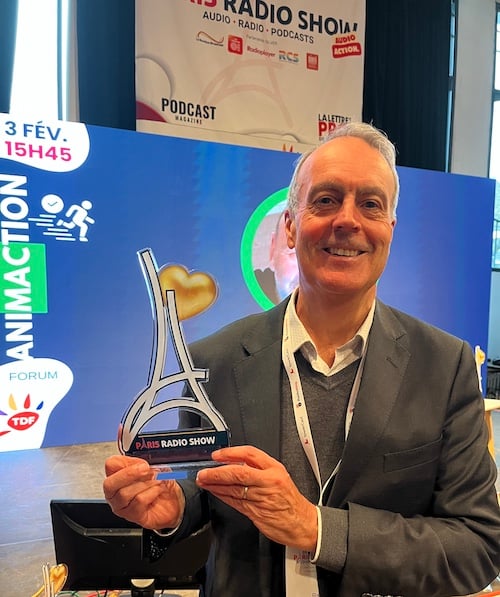
Steve Ahern
is author of the text book Making Radio and Podcasts,
proprietor of the training company AMT Pty Ltd and
publisher of this audio industry trade journal.
Yes, Steve is available to talk about WRD, Message +61 412 884465
Steve’s Google Gemini prompt:
Use this image, edit it to remove the jacket of the main person. Also make the Eiffel Tower and other landmarks larger in the background to indicate that the location is Place de la Concorde in Paris.
The original image:
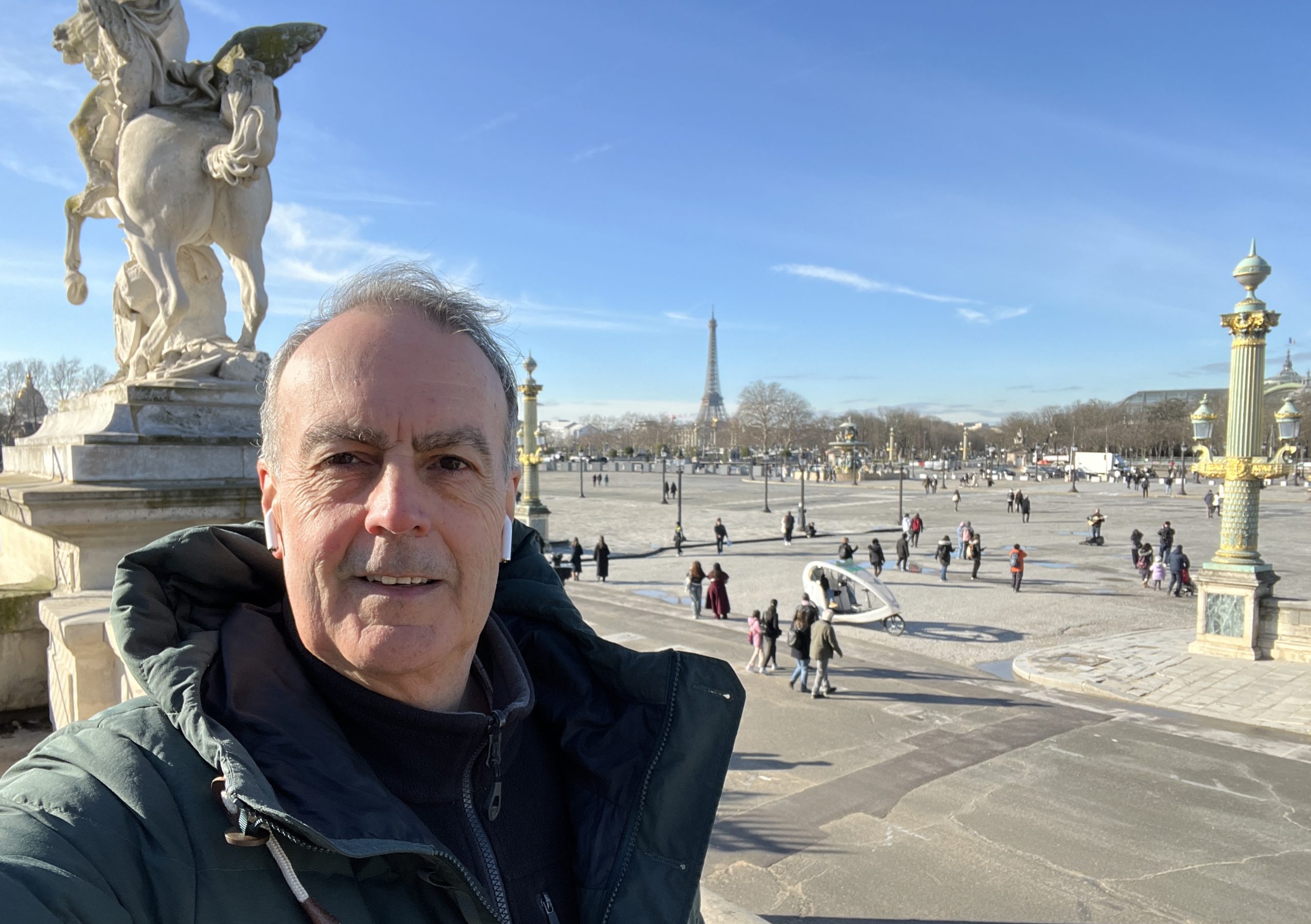
Our policy is always to disclose when we use AI.
Some of Steve’s previous World Radio Day letters:
Recent comments (0)
Post new comment