What's New
BY RadioToday Network June 1, 2026
What's New March 31, 2026
National Film & Sound Archive announces 2026 Sounds of Australia
Reporter

Nine standout pieces of audio illustrating Australia’s cultural and political life and environment have been added to the Sounds of Australia collection as the National Film and Sound Archive launches a new website for national audiences.
Established in 2007, the Sounds of Australia is the NFSA’s capsule collection of sound recordings with cultural, historical and aesthetic significance and relevance, which inform or reflect life in Australia.
A panel of industry and NFSA sound experts vote on public nominations of recordings more than 10 years old.
This year, the NFSA has added Rosie Batty’s 2015 Australian of the Year speech, ‘Scar’ By Missy Higgins and Joe Dolce’s ‘Shaddap You Face’ to its capsule of significant Australian sounds.
2026 additions also include pioneering world music collaboration ‘Tabaran’ by Not Drowning, Waving and the musicians of Rabaul featuring Telek, the Federal Court’s Native Title Determination at Noonkanbah Station and the jingle from the Reading Writing Hotline.
The Sounds of Australia are available on the NFSA’s relaunched website, which now contains more than 5500 highlights from the national collection.
More will be added as material is preserved and digitised.
With smart search, curated tags and multimedia storytelling, the site makes thousands of items – from century-old recordings to recent social media – easier to explore, reinterpret and share, offering creators, educators, fans and researchers a new launchpad into Australia’s audiovisual history.
“The Sounds of Australia capture audio moments of creativity, Australian identity and everyday life that resonate across generations,” said Patrick McIntyre, the CEO of the NFSA.
“Presenting these recordings within the rich digital environment of our new online home means you can not only listen to them but discover the context around them. You can follow connections to other works and explore Australia’s sonic heritage in ways that haven’t been possible before. The doors to the national audiovisual collection are now open wider than ever.”
The 2026 Sounds of Australia, in chronological order, are:
‘You,’ Marcia Hines – 1977
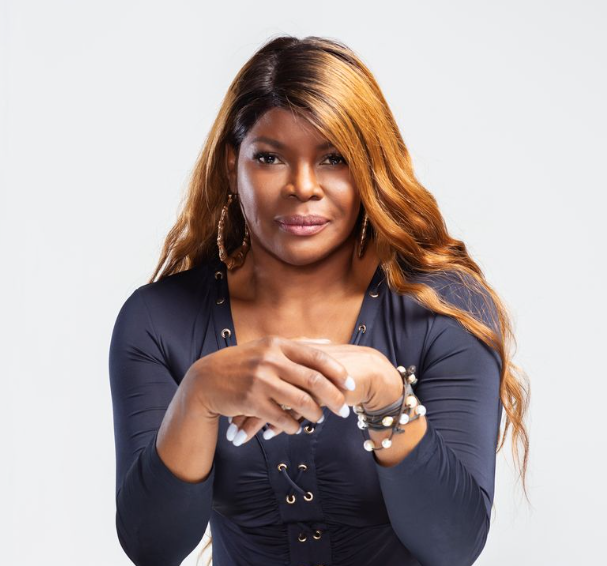
Released in 1977, ‘You’ became Marcia Hines’ biggest hit, spending 25 weeks on the Australian charts and peaking at no. 2.
Written by American songwriter Tom Snow, the song was transformed by Hines’ radiant vocal performance into a soul-pop anthem of love and longing.
Its uplifting message and gospel-inflected arrangement struck a chord with audiences and solidified her status as a household name.
Beyond its chart success, ‘You’ remains a landmark recording in the story of Australian music: a symbol of inclusivity, optimism, and the power of great pop.
Hines would later be inducted into the ARIA Hall of Fame in recognition of her trailblazing influence. As she told the ABC in 2023 ‘That song changed everything.’ At a time when Australian pop was still defining its mainstream identity, ‘You’ confirmed
Hines as a major national artist and showed how vocal interpretation could shape the sound — and visibility — of Australian music.
‘Shaddap You Face,’ Joe Dolce – 1981
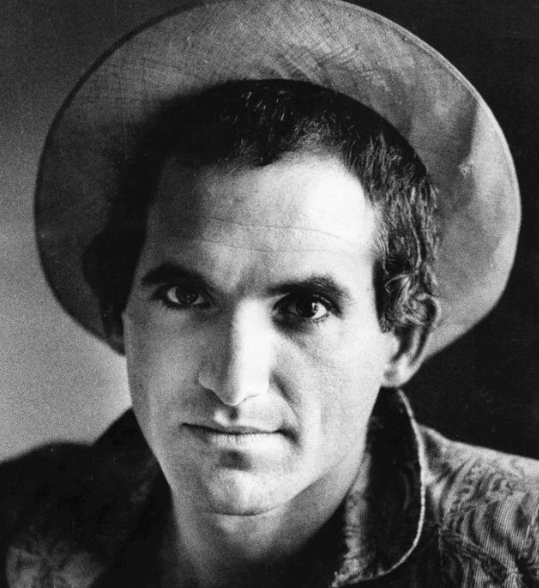
Released in 1981, ‘Shaddap You Face’ became the best-selling single ever produced in Australia, spending 8 weeks at number one and topping charts in 11 countries, including the UK and Germany.
Dolce wrote the song in 1979 and first performed it at a talent night at Marijuana House, Fitzroy, subsequently recording it in 1980 for the Full Moon Records label. The song is driven by comic timing and character. Dolce performs in character, using exaggerated accent and stereotype. While that approach reads differently today, it was widely received at the time as self-aware and affectionate, reflecting multicultural suburban life and working-class humour.
The song’s impact endures through hundreds of cover versions in numerous languages, including Australian Indigenous languages such as this Yindjibarndi language version by Gnarnayarrahe Waitairie.
It holds a continued presence in popular culture worldwide where it has become a subversive anti-racist anthem.
PB/5 pedestrian crossing button signal – 1984
The PB/5 pedestrian crossing button reshaped how Australians move through cities and suburbs.
Designed by David Wood, Louis Challis and Frank Hulscher, it was created to support pedestrians who are blind or have low vision through sound and touch.
The locator ‘tick’, vibrating arrow and steady crossing tone are functional, but also instantly recognisable. The PB/5 produces its sound in real time, so
this recording serves as a representation of this ubiquitous mechanical element of Australia’s urban soundscape.
The device’s success led to its adoption in other countries such as New Zealand, Ireland, Singapore and parts of the USA, and its cultural resonance was further cemented when the distinctive tick was sampled in Billie Eilish’s 2019 hit ‘Bad Guy’.
‘Tabaran,’ Not Drowning, Waving and the Musicians of Rabaul featuring Telek – 1990
The title track from the 1990 album Tabaran, this recording brings together Australian band Not Drowning, Waving with musicians from Rabaul, Papua New Guinea, led by singer George Telek. The collaboration began after Telek met David Bridie in 1989, with sessions recorded in Rabaul soon after. Telek sings in Kuanua and Tok Pisin, using the three-part harmonies characteristic of Tolai music.
These vocal traditions sit alongside contemporary studio production, creating a recording shaped by shared performance rather than adaptation.
‘Democracy Manifest / Succulent Chinese Meal,’ Jack Karlson – 1991

In 1991, police arrested Jack Karlson at a Brisbane Chinese restaurant while television cameras were present.
Karlson welcomed the spotlight and began to recite now iconic, much-memed phrases: ‘Gentleman! This is democracy manifest!’ and ‘What is the charge? Eating a meal? A succulent Chinese meal?’
Karlson speaks with theatrical precision, shifting between mock outrage and formal oratory.
Reading Writing Hotline jingle – 2001
First launched in the 1990s to support the ABC’s Reading Writing Roadshow, the Reading Writing Hotline paired a practical service with a tune you couldn’t shake.
The 2001 version became the one most Australians know, running for years as a community service ad.
The original Hotline brief, which was awarded to ‘Life. Be in it’ Communications, identified that more than a million adult Australians whose first language was English were unable to read and write well enough to handle everyday tasks.
‘Scar,’ Missy Higgins – 2004
When ‘Scar’ hit Australian airwaves in 2004, it did more than launch the career of a promising young singer-songwriter: it became an instant classic that defined an era of local pop.
Released as the lead single from Missy Higgins’ debut album The Sound of White, ‘Scar’ shot to number one on the ARIA Singles Charts and stayed in the top 40 for 23 consecutive weeks – remarkable for a confessional, self-penned track in a market then dominated by glossy international pop.
Federal Court native title determination at Noonkanbah Station, ABC Kimberley broadcast – 2007
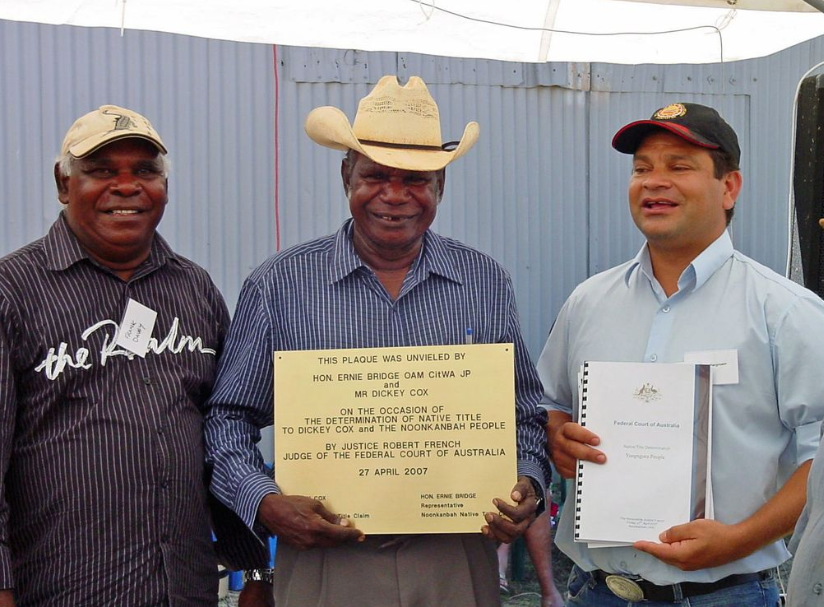
On 27 April 2007, the Federal Court recognised the Yungngora people’s native title over Noonkanbah Station in Western Australia’s Kimberley region. marking the culmination of a struggle that spanned decades, spearheaded by Yungngora Elder Mr D. Cox.
The proceedings, presided over by Justice Robert French, were aired on ABC Kimberley’s Mornings program, hosted by Vanessa Mills in an outside broadcast beside the old Noonkanbah woolshed.
The recording includes speeches by Mr. D. Cox and Fred Chaney OA, and a performance by MP and country music singer Ernie Bridge OAM. It was the first time a native title determination was broadcast live on radio, capturing not only the formal legal proceedings but also the emotional responses of the community – songs, speeches, and the palpable sense of justice long awaited.
The audio recording stands as a testament to the power of broadcasting to bring pivotal moments of Indigenous recognition and reconciliation into the public consciousness, marking a significant chapter in the journey towards acknowledging and respecting Aboriginal land rights.
Australian of the Year acceptance speech, Rosie Batty – 2015
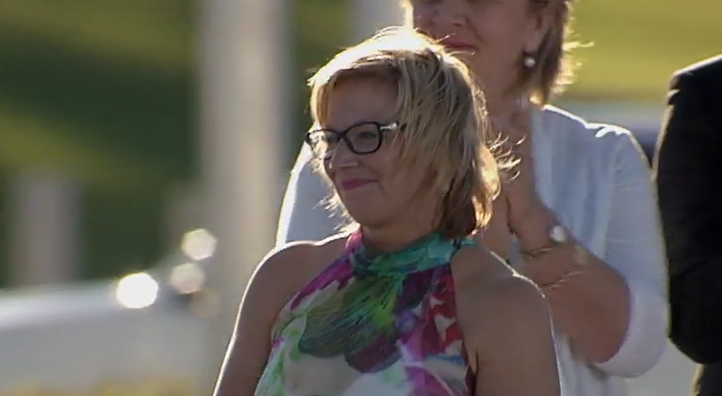
In 2015, Rosie Batty was named Australian of the Year following her advocacy after the murder of her son, Luke.
Her acceptance speech addresses the nation directly, combining personal experience with a clear call for accountability and change.
Broadcast nationally and shared widely online, the speech became a reference point for public discussion. It amplified survivor voices and contributed to a broader shift in awareness, policy attention and media coverage, framing domestic and family violence as a national responsibility rather than a private tragedy.
Preserved as audio, the recording captures a moment when speech itself shaped national conversation — demonstrating how testimony can operate as civic action and influence collective understanding.
The complete Sounds of Australia list (1896-2015) is available at nfsa.gov.au/sounds.
Marcia Hines image credit: Ricciardo Raiti
Jack Carlson image credit: Channel Seven
Joe Dolce image credit: Jacqueline Mitelman
Other images supplied by NFSA
Recent comments (0)
Post new comment