What's New
BY Sarah Patterson July 17, 2026
What's New October 4, 2025
IBC Trend 4: Typing, tapping, talking and technology: #IBC25
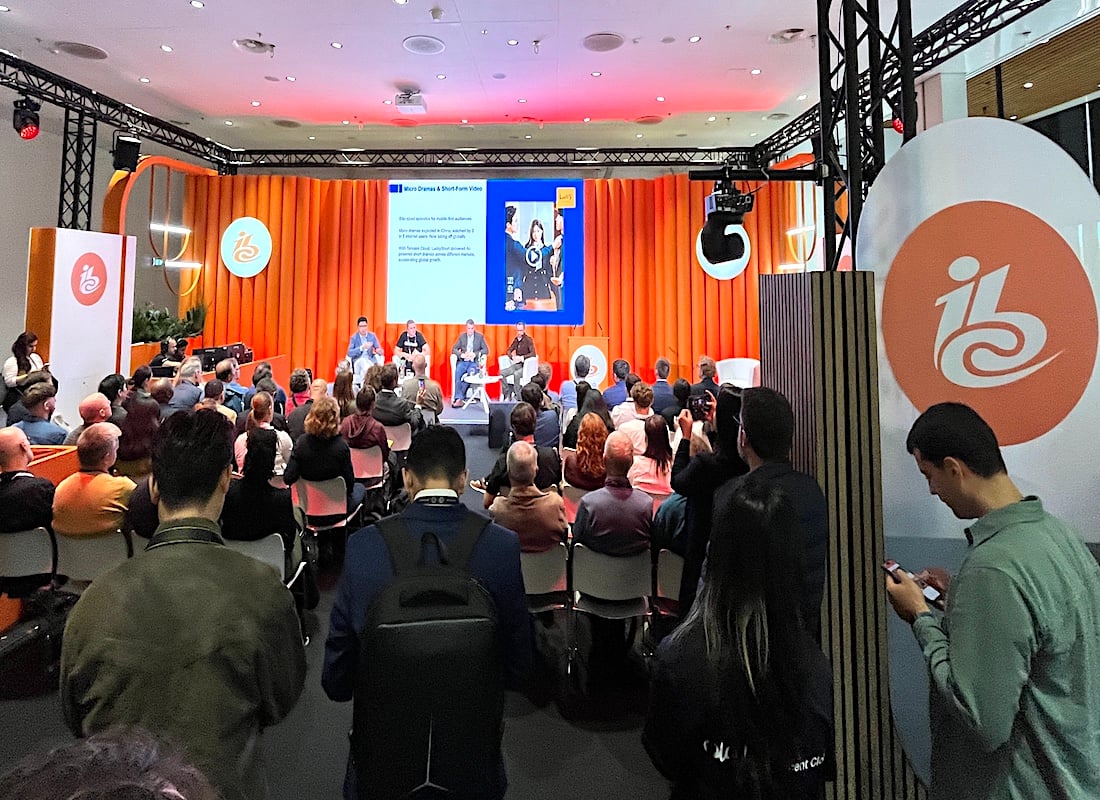
In this final 4th trends report from IBC 2025, Steve Ahern surveys more of the trends and technology on show at this year’s conference and exhibition.
Interacting with information
Since the invention of the typewriter, typing had been the primary way to create and interact with information. When computers came along the keyboard remained the primary means of interacting with text in the new online, searchable, information rich environment.
Then came smart phones, iPads and touch screens, enabling a new way to interact with information, tapping the screen. Both typing and tapping required viewing and touching keys or a screen.
With improved voice recognition and voice replication, coupled with agentic AI interaction, a new era of information interface is dawning. Talking.
We have been talking to our phones, smart speakers, car systems and remote controls for some time now, but the next advances in technology will allow us to use natural speech to interact at a deeper level, with ‘context models’ and ‘audio intelligence models’ taking voice interaction to the next level.
It will also bring more ways for radio presenters to interact with their audiences, and also with their equipment, as I discussed with Broadcast Bionics’ Dan McQuillan.
Vanity Metrics
Social media follower numbers and ‘views’ are being labelled ‘Vanity Metrics,’ as more people wake up to the way big tech has set its own rules for measuring audience.
Vanity metrics look great for reporting big numbers to the boss or for the annual report, but don’t always help advertisers or program makers gauge the real level of engagement with their content.
If someone scrolls for 5 seconds it is a social media ‘view,’ but did they really see anything of significance or make real contact with a brand? Fandom is a new way of looking at measurement and describing deeper engagement. Influencers, journalists, podcasters and radio presenters with real fans will stand the test of time, but those with only vanity metric numbers will fade away, according to Evan Scaprio: “Creators are the new superstars. They build passion and fandom”
Content creators who “build fans into the centre” of everything they do and personalise content are the ones who will continue to be successful as the creator media ecosystem evolves.
Fandom doesn’t require huge numbers, it requires better engagement at a time when trust in social media is waning and truth is being manipulated by AI. The power will shift back to real broadcasters with a good reputation and engaged fans, if they embrace this philosophy.
Media Curriculum
IBC had a specific conference strand for educators that looked at how educational institutions are working with media and the challenges of designing curricula for such a fast-changing industry.
Various speakers examined the current uptake of media technology courses and whether they are meeting the needs of students and industry. In a fast moving discussion, the key points were that training has moved from hardware to software, with hardware operational training now moved to electives in various streams, rather than being part of the main curriculum.
AI is now a mandated subject in all media courses, but some fundamentals are still important. “AI can fix up bad recordings, but why not get good recordings to begin with,” said one speaker.
“We are still teaching signal processing, because transmission problems can be better solved by good signal processing, not by using AI to fix up bad signals.”
Another approach is core and sub-core streams, for example, one course no longer teaches voiceovers for their storyboards, they use AI for it. “Unless you want to be a voiceover artist, VOs are not a core skill for you, so just use AI for that part.”
All the educators were in agreement that we are still in middle of a tech development cycle, so curriculum will continue to change over coming years.
From a student point of view, they want industry knowledge and to understand what industry wants from us. Being part of practical projects – film making, live broadcasts and on air events is considered essential to the students.
As part of a worldwide initiative for student broadcasters, there will be a world wide student broadcast on 16th October showcasing audio and video work by students all around the world.

Youtube is not the enemy
A conference session addressing the tension between broadcasters, film makers and Youtube saw two sides of the fence come together in discussion, with Justine Ryst, Managing Director of YouTube France on stage with Grace Boswood, Director of Technology and Distribution at Channel 4.
Justine began by “busting some myths,” saying “Youtube is not the enemy of legacy media… It brings you money and analytics.” She lost me when she called broadcasters ‘legacy media,’ still using that pejorative term that big tech uses to imply that broadcast is dead and has bequeathed its legacy to Silicon Valley.
Tyring to remain objective, I also wrote down her next comment: “Youtube doesn’t create content or own IP. We give your content a window to the world.”
Grace Boswood said Channel 4 has been working successfully with Youtube and has had success. Her points were:
- YouTube and tv are not the same thing. The user experiences are very different.
- Content is discovered in a different way. We need to work on discovery and prominence, especially in Smart TVs.
- Old content was discovered and resurfaced via Youtube.
- Ch4 Launched Channel 4.0 to engage on YouTube. “Now our viewers are on tv, ch4 app, and YouTube. Some audiences do not want to engage on our app.”
- We balance what and when we publish on YouTube. “We make a bundle on old content that has loyal niche audiences.”
- Benefits: 54 is then average age of people who consume our on air broadcast, 34 is the average age on YouTube.
- Ch4 sells their own advertising in a deal with Youtube and integrates it with tv sales. “We figured out a partnership that works for both parties. We usually sell out our tv inventory, so this gives us more.”
Using AI in your media business
AI was the underlying theme of so many topics in the IBC conference agenda. From a media business point of view, these views on how to integrate AI were useful:
Don’t just take old world paradigms and overlay them with AI. “You have the opportunity to rethink the business model and the proposition, as long as you know what you want to achieve and the values you bring for your audience.”
Audiences will use THEIR AI to personalise YOUR products, so take control of personalisation from the media company end. “A year on from the first public introduction of AI, audiences are beginning to gain confidence on how to use AI for their personal benefit.”
Let your workforce experience and use AI from the ground up as well as planning its use from the top. “It’s about mindset and culture in your workforce.”
AI is very useful for Corporate Governance and Compliance tasks.
By end of this year more than half of the world’s population will have voted, 64 countries are holding elections this year. “Disinformation is a real threat to elections, to trust and confidence in the electoral process.”
34 million AI images are being created every day, thousands of podcasts are now being generated by AI. “Responsible newsrooms and broadcasters should declare when they use AI, if you get caught out it undermines the credibility of your news brand… That credibility is all we really have to combat fake AI content.”
“At CBS News our legacy is credibility, so yes, we are investing in technology and we are also investing in experienced journalists to ensure confidence in the accuracy of our output. That is the safeguard we are looking for… This is a new industrial revolution. The new industrial issues are provenance and detection.”
Previous reports:
IBC Trend 1: Growth, not cost cutting is the recipe for AI success #IBC25
IBC Trend 2: Car screens to get smaller, voice control improving #IBC25
IBC Trend 3: A different approach for studio desk connectivity and configurability #IBC25
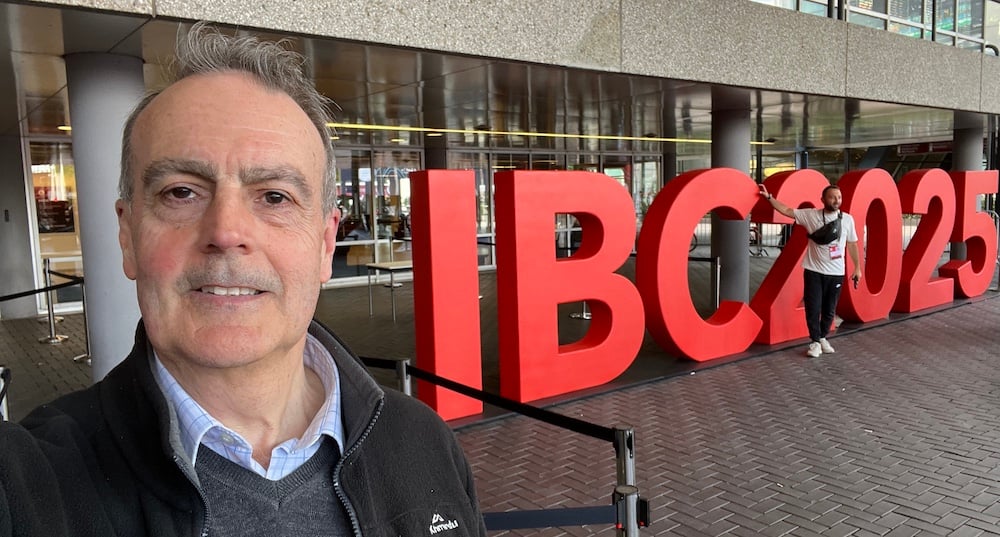
Reporter: Steve Ahern is the publisher of this trade journal and the CEO of the training company AMT Pty Ltd.
Recent comments (0)
Post new comment
Related features
What's New
BY RadioToday Network July 16, 2026