What's New
BY Sarah Patterson June 29, 2026
What's New March 25, 2026
From building on-air duos to why DAB+ matters: The lowdown from Radiodays Europe 2026
Reporter
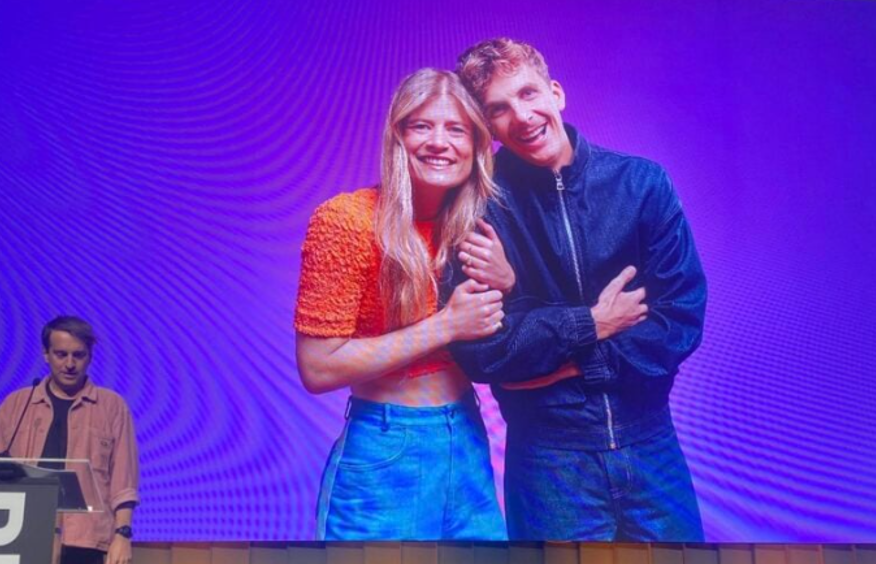
Podcasting, the importance of DAB+ and the secret sauce on how to produce a successful on-air duo have all taken centre stage at Radiodays Europe 2026.
Radioinfo’s Jen Seyderhelm is in Riga, Latvia, covering the event.
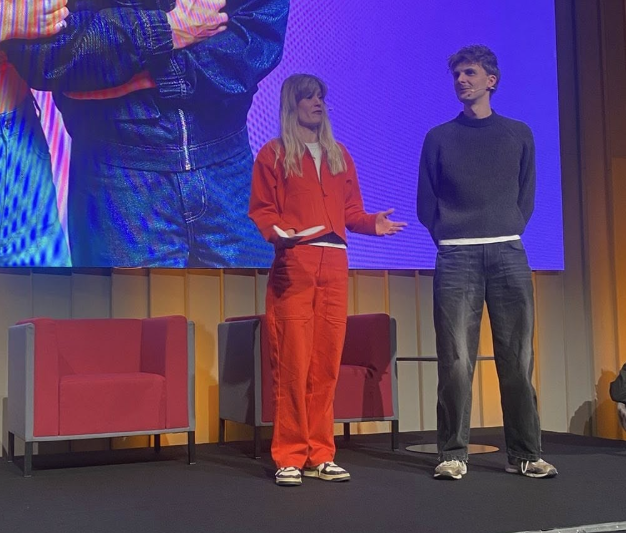
The session titled ‘Building a Duo on Air’ demonstrated the mindset and practices of the on-air team at Studio Brussel.
Sam De Bruyn is the show’s Executive Producer and Talent Coach. The Breakfast hosts are Eva De Roo, a veteran radio presenter and legacy personality in Belgium, and Dries Lenaerts, who was a product of Sam’s talent management and this his first major radio role.
The most important thing for a radio duo? Put in groundwork put in before even setting foot in the studio to create respect and trust and give full commitment to the show and to each other.
After Eva and Dries met, Sam showed the audience an image of a messy whiteboard where the two shared what they knew about each other, and what they didn’t. He then identified what was missing from the conversation and sought to fill those gaps with the rest of the breakfast team.
In those whiteboard sessions, Sam, Eva and Dries created boundaries and non-negotiables. Eva, a mum of two with a high-profile partner, didn’t want to be a mum character on air, she just wanted to be Eva. Dries had just embarked on a new relationship when Sam offered him the job. He was worried that the Breakfast hours would kill the relationship before it began. Sam had to convince him, the relationship is going strong, but it is something that Dries prefers to remain private too.
The non- negotiables fed from there, and they are valuable for any heathy workplace. They are:
Boundaries are never to be crossed
Follow the fun – Sam emphasised that breakfast radio people must be positive and optimistic. The opposite should be hosting shows elsewhere.
All the crew should say good morning to Eva and Dries every morning when they arrive. That is an acknowledgement that they have turned up and are ready to work. The duo particularly loved this and how much this mattered to them.
Music played on the station is a fluid thing, unlike Australia’s set logs. One of the team is a music director called Lyn. Lyn had the final decision on songs played and there would be no questioning her decisions until after the show.
No silent treatment, ever. If all that could be managed was a ‘I’m mad and I’m not quite sure why I feel this way yet’ then that was preferred to an angry silence.
Asking for help is not a crime, and
We all have a life outside work and that matters. Eva added that you must, as it gives you content to talk about on the radio.
Sam compared making a great on-air duo with making mayonnaise: The ingredients are disparate flavours and tastes – egg, mustard, vinegar or lemon and oil. The chef knows it’s not just a case of throwing all the parts in a bowl and mixing. It’s done in stages and it takes time and skill or else it may split.
When these ingredients do come together, the result is magic.
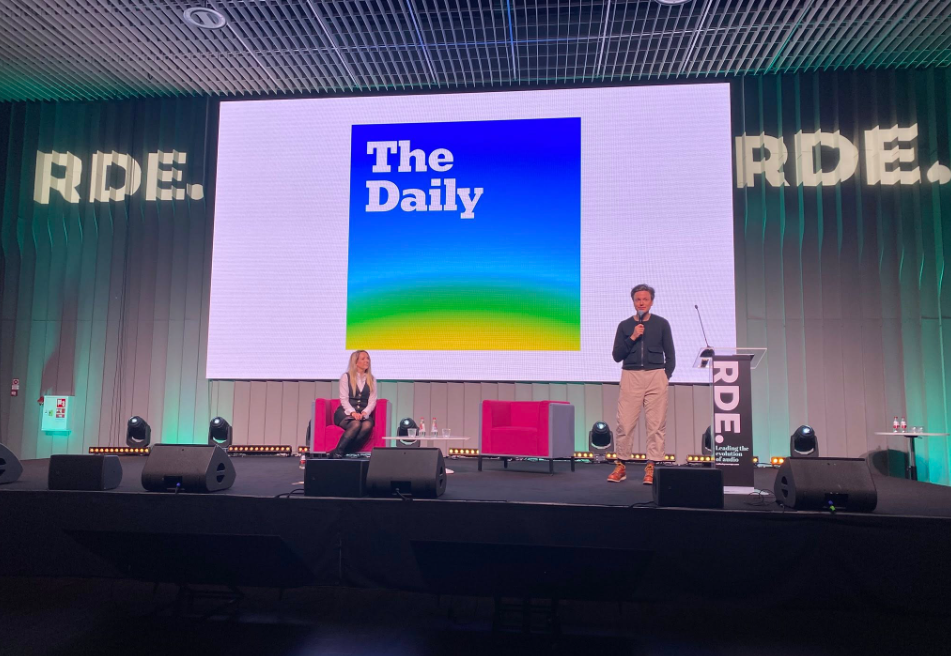
Other sessions included the rise of The Daily podcast and its importance.
The Daily, a podcast from the New York Times, was launched as Donald Trump started his first term as US President in January 2017. It began as a weekday podcast, hosted by political journalist Michael Barbaro, making sense of the biggest story of the day, or stories.
By August that first year it neared 4 million listeners. In 2024 it was Apple’s most popular show on their platform. Midway through last year the podcast affiliated with ARN iHeart for its sales representation in Australia and thus appeared on the Triton Australian Podcast Ranker. It usually sits in the top 10, with a million monthly downloads here. In the most recent ranker it was #10 and the only international podcast in the top 20.
From a starting team of five, The Daily has grown to a staff of 40, with now two other hosts, Rachel Abrams and Natalie Kitroeff, sharing the load with Barbaro.
Also part of the legacy is Sabrina Tavernise, who was the first co-host, joining The Daily when Russia invaded Ukraine in 2022. She has subsequently chosen to return to her NYT reporting role.
Key inflection points in this session were:
What is the story?
What are the stakes?
Why does it matter?
What happened?
Who are the players?
Three key moments that led to this?
What is I saw it from this perspective?
What are the key takeaways?
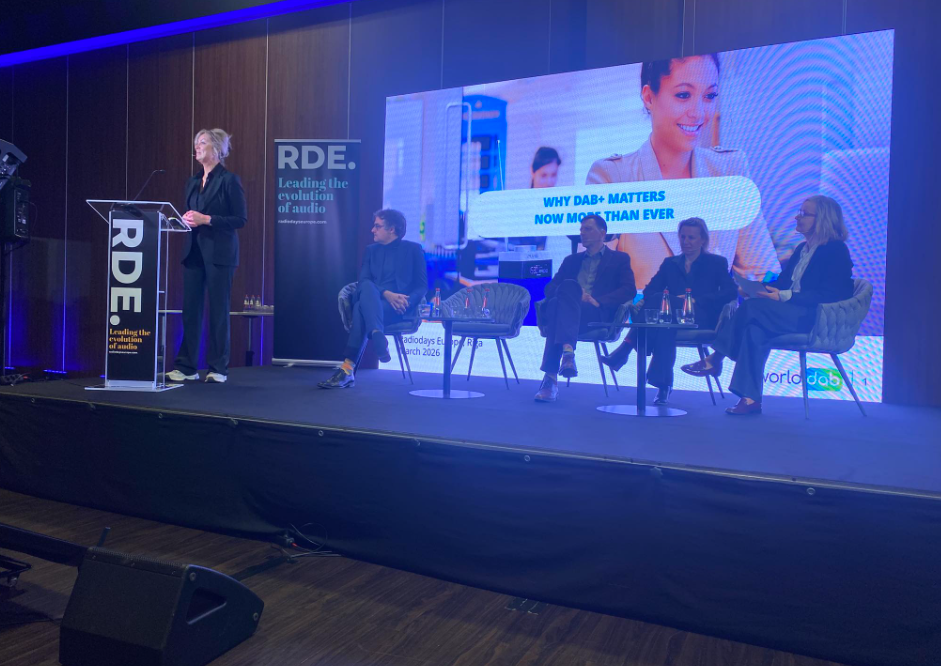
There was also a session dedicated to the importance of DAB+, facilitated by Bernie O’Neil (Project Office Director) and Jacqueline Bierhorst (President) from WorldDAB.
Australia and parts of Asia are seen as the leaders in digital radio. Some European countries’ digital migration is complete and, with Estonia’s highest point just 300 metres, the ability to capture large areas with ease, straightforward.
But some countries, like Ireland and Portugal for example, are still just trialling DAB+.
In these troubled times Jaqueline and Bernie said wherever DAB+ is implemented it can support national, regional and local audiences. It protects language, culture and freedom. A healthy broadcast radio industry should be able to incorporate traditional linear radio, internet streaming and digital broadcasting.
Images supplied.
Australia hardly a leader in the DAB space. No expanding in to country area’s, those small community stations haven’t convirted to DAB.
Are we going the way of Canada which dropped DAB? Makes you wonder who’s putting pressure on who or we would have seen more country areas connected as promised at launch..
Australia a digital radio leader?
I work in Brisbane and get all the FM stations clear as anything in my office, but no DAB. In the car it drops in and out.
DAB+ Australia a “leader”. No. Same in Adelaide as per drop outs. Seems ABC in Perth preferred to migrate from AM to FM recently as unable to coverage/listeners on DAB?